Tell us about the job
Takes about a minute. No obligation.
Sizing a boiler for Salt Lake County starts with how hard the burner will actually run. Homes in Salt Lake County, UT run heat about eight months a year, from October through May. A burner cycling through a heating season that long puts real hours on the heat exchanger, the ignition assembly, and the expansion components every single year. A contractor who skips a proper load calculation and installs a unit that short-cycles under a lighter-than-expected load will have the homeowner calling about cracked heat exchangers and ignition failures well before that equipment should be showing those problems.
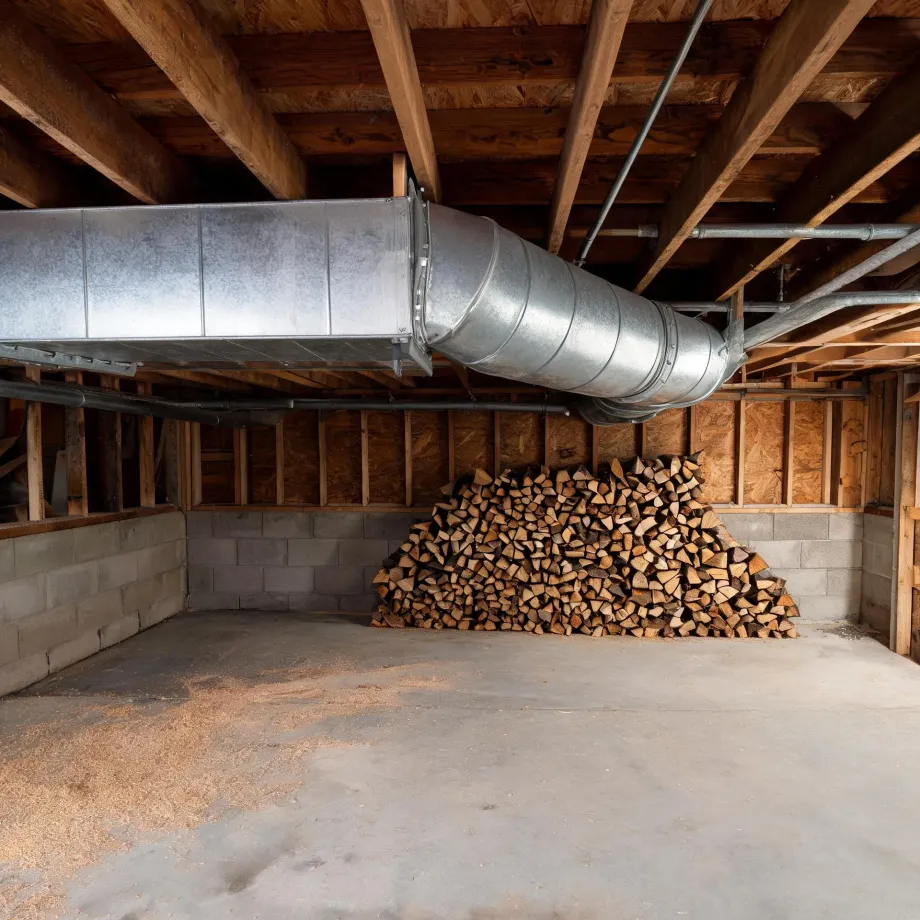
Ductwork in a house built for an older generation of heating equipment was sized, routed, and sealed for that equipment, and a new boiler has to work with what is there or the contractor has to change it. Half the homes in Salt Lake County, Utah were built in 1986 or earlier (2020-2024 ACS 5-year). That means the duct layout a contractor walks into is as consequential as anything on the equipment order, and in houses where the original runs stay in place, the electrical service that feeds the new unit gets the same scrutiny. What a contractor finds behind the walls decides the scope before the boiler itself ever gets touched.
What Goes Into a New Boiler System
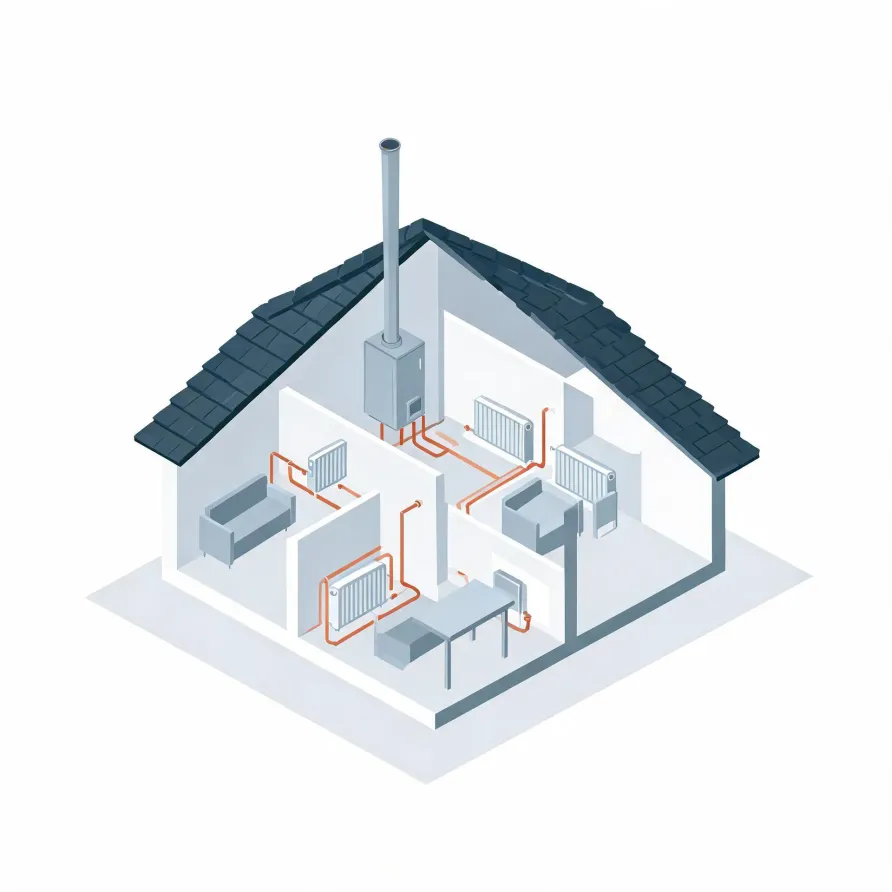
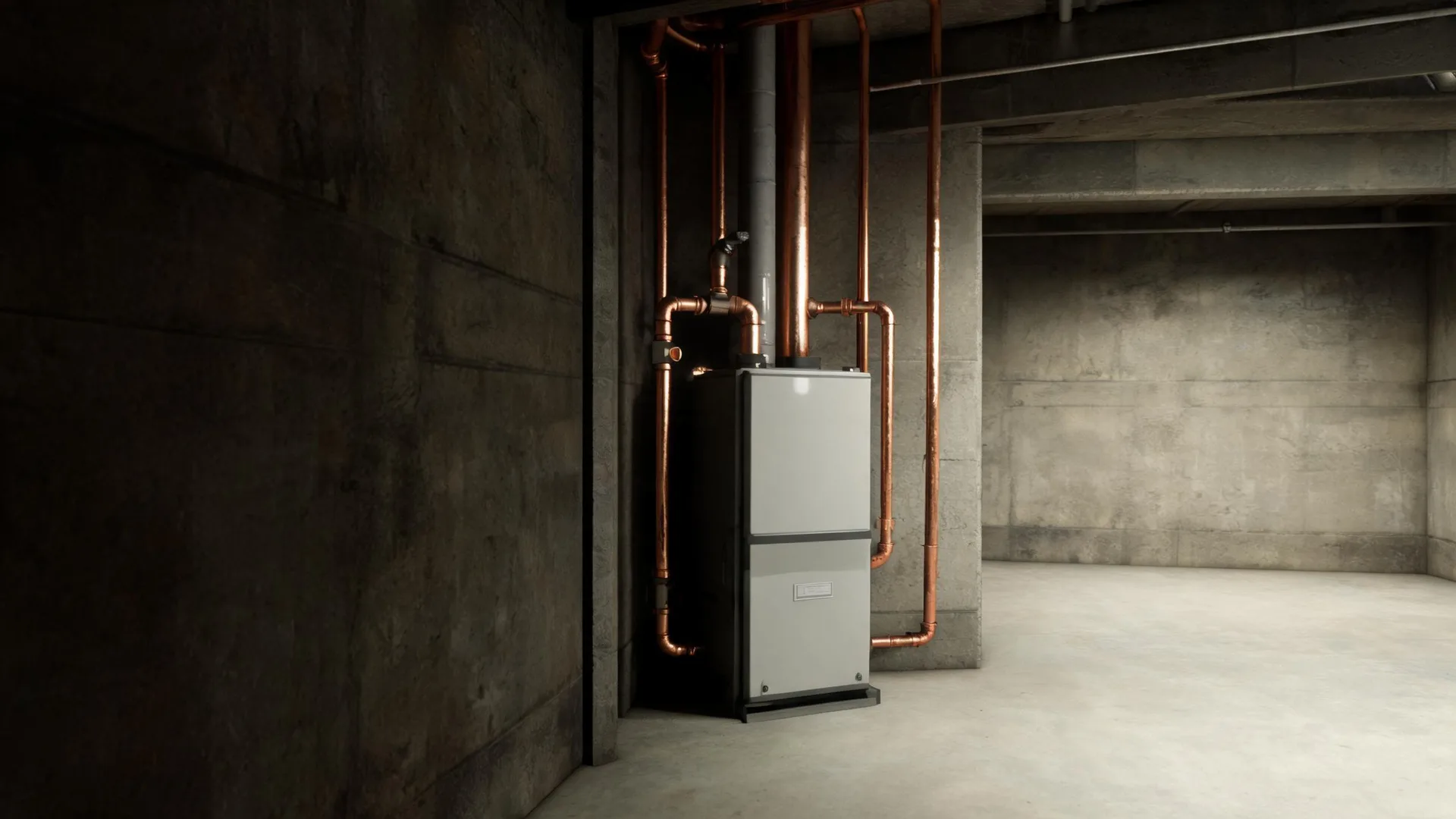
The boiler itself sits in the basement or utility room and is the heart of the installation. A contractor sets it on a solid surface, connects it to the fuel supply, and ties it into the home's water lines. From there, a circulator pump moves heated water through the system.
Radiators or radiant floor loops distribute that heat through each room, and each zone gets its own thermostat or valve so temperatures can be controlled independently. An expansion tank and pressure relief valve sit close to the boiler unit, protecting the system from pressure buildup.
The drawing shows a typical boiler layout, and a licensed contractor determines exactly which components and configurations apply to your home.
Find a contractor in Salt Lake CountySalt Lake County, by the numbers
314 severe weather events were recorded in Salt Lake County, Utah between 2015 and 2024.
NOAA National Centers for Environmental Information, Storm Events Database, bulk CSV export, events 2015-01-01 through 2024-12-31.Half the homes in Salt Lake County, Utah were built in 1986 or earlier (2020-2024 ACS 5-year).
U.S. Census Bureau, 2020-2024 American Community Survey 5-Year EstimatesSalt Lake County, Utah holds 449,662 housing units (2020-2024 ACS 5-year).
U.S. Census Bureau, 2020-2024 American Community Survey 5-Year EstimatesOwners occupy 66.1% of the occupied homes in Salt Lake County, Utah (2020-2024 ACS 5-year).
U.S. Census Bureau, 2020-2024 American Community Survey 5-Year EstimatesBoiler Installation Rules for Salt Lake County, Utah2 codes, standards, and laws
Licensing and Legal Requirements in Salt Lake County, Utah
Utah’s contractor licence does not reach alteration, repair, remodelling or improvement of a building worth less than $7,000 in labour and materials together, counting every change and addition to the agreed work — though the plumbing and electrical trades are pulled back under licensure even below that figure.
Utah requires a state licence before engaging in a licensed construction trade or contracting activity, and HVAC contractor is one of the licence classifications the state issues.
Severe Weather Events in Salt Lake County
Salt Lake County's weather puts real stress on heating equipment, and a boiler sized or installed without accounting for local conditions will work harder than it should. That workload shapes every decision a contractor makes about equipment selection and installation.
314 severe weather events, 2015–2024. Source: NOAA National Centers for Environmental Information, Storm Events Database.