Tell us about the job
Takes about a minute. No obligation.
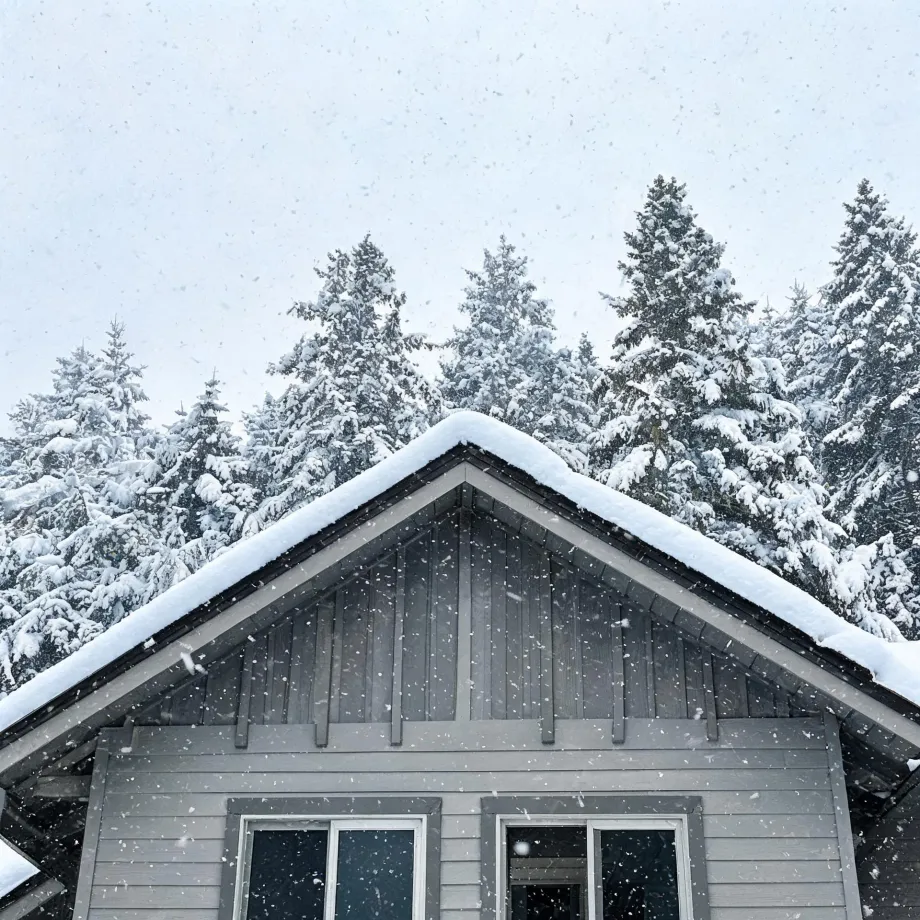
A boiler in this house runs its burner and ignition system hard for the better part of every year. Homes in Millard County, UT run heat about eight months a year, from October through May. That means the igniter, the flame sensor, and the heat exchanger are cycling repeatedly across a long stretch with almost no idle time to break it up. A contractor here looks at those components first, because accumulated cycling wear is the likeliest explanation for what broke. Parts that hold up fine in a shorter season reach the edge of their service life faster when the burner almost never sits cold.
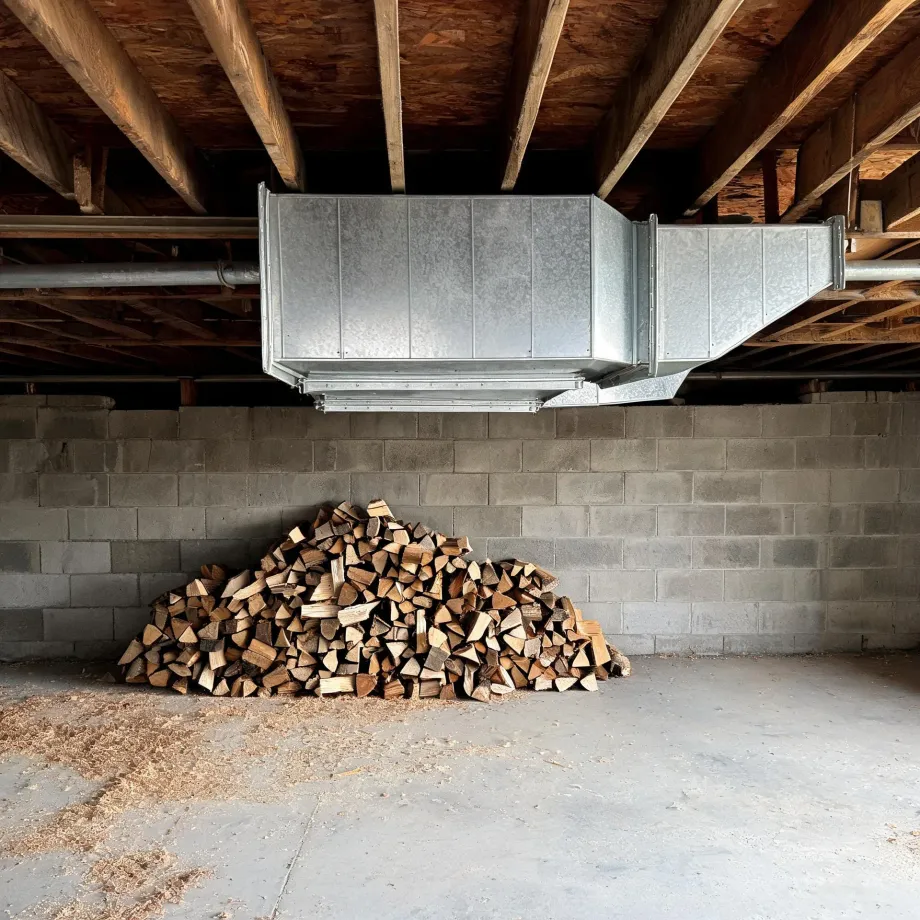
Boilers in housing stock this old often run on parts that sit at the outer edge of what suppliers still carry. Half the homes in Millard County, Utah were built in 1974 or earlier (2020-2024 ACS 5-year). That kind of age in a home does not tell a contractor much about what they will find once the boiler is open, but what they do find frequently requires sourcing components that are scarce or have been superseded by non-equivalent replacements. A repair quote here depends on what the opened unit actually contains and whether matching parts still exist, not on the building's age.
The Parts of a Boiler a Contractor Checks During a Repair
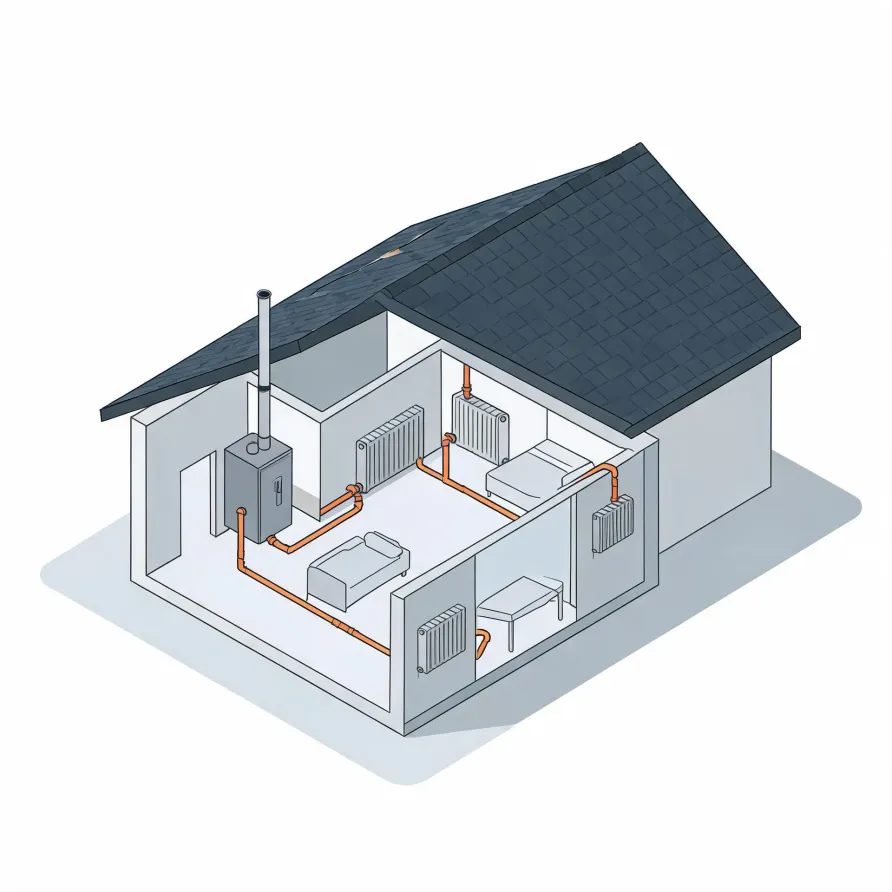
The boiler itself sits in the basement or mechanical room and is the piece a contractor looks at first. It houses the burner, heat exchanger, and controls that keep the system running. When heat stops reaching the rooms, or when the unit short-cycles or makes noise, the fault usually traces back to one of those internal components.
Radiators or baseboard units sit in each room and are the pieces a homeowner notices when something is off. Connecting them to the boiler are the supply and return pipes, along with circulator pumps that move the heated water through the loop. Zone valves, expansion tanks, and the pressure relief valve round out what a contractor works through when tracing a problem.
The drawing shows a typical boiler system layout, and a licensed contractor determines which parts and conditions apply to your specific home.
Find a contractor in Millard CountyMillard County, by the numbers
72 severe weather events were recorded in Millard County, Utah between 2015 and 2024.
NOAA National Centers for Environmental Information, Storm Events Database, bulk CSV export, events 2015-01-01 through 2024-12-31.Half the homes in Millard County, Utah were built in 1974 or earlier (2020-2024 ACS 5-year).
U.S. Census Bureau, 2020-2024 American Community Survey 5-Year EstimatesMillard County, Utah holds 5,045 housing units (2020-2024 ACS 5-year).
U.S. Census Bureau, 2020-2024 American Community Survey 5-Year EstimatesOwners occupy 81.8% of the occupied homes in Millard County, Utah (2020-2024 ACS 5-year).
U.S. Census Bureau, 2020-2024 American Community Survey 5-Year EstimatesCodes & Standards That Apply to Boiler Repair in Millard County, Utah2 sourced rules and standards
Licensing and Legal Requirements for HVAC Repair in Millard County, Utah
Utah’s contractor licence does not reach alteration, repair, remodelling or improvement of a building worth less than $7,000 in labour and materials together, counting every change and addition to the agreed work — though the plumbing and electrical trades are pulled back under licensure even below that figure.
Utah requires a state licence before engaging in a licensed construction trade or contracting activity, and HVAC contractor is one of the licence classifications the state issues.
Severe Weather Events in Millard County
Extreme weather puts real stress on boiler systems, and how often that stress hits depends entirely on where you are. The record below shows what Millard County has seen, because that history shapes how hard local equipment has to work and how quickly problems show up.
72 severe weather events, 2016–2024. Source: NOAA National Centers for Environmental Information, Storm Events Database.