Tell us about the job
Takes about a minute. No obligation.
A boiler in this area spends most of its working life firing, not sitting idle. Homes in Cache County, UT run heat about ten months a year, from September through June. That sustained cycling loads the burner, the heat exchanger, and the ignition system with wear that builds incrementally across each season. A contractor called out for a repair here checks combustion components early in the diagnosis, because those are the parts that have been asked to do the most work. Distribution faults and controls matter, but they fail less predictably from runtime alone.
Boilers in Cache County's older homes carry a history that shows up the moment a contractor opens the unit. Half the homes in Cache County, Utah were built in 1992 or earlier (2020-2024 ACS 5-year). A heat exchanger that has been running through that many heating seasons can develop hairline cracks a visual check from the exterior will not catch, and flue connections that were adapted from one system to another tend to show gaps only once the original equipment is removed. A contractor working on a boiler here prices the visible components after checking what the distribution and venting have actually become.
The Parts of a Boiler a Contractor Checks First
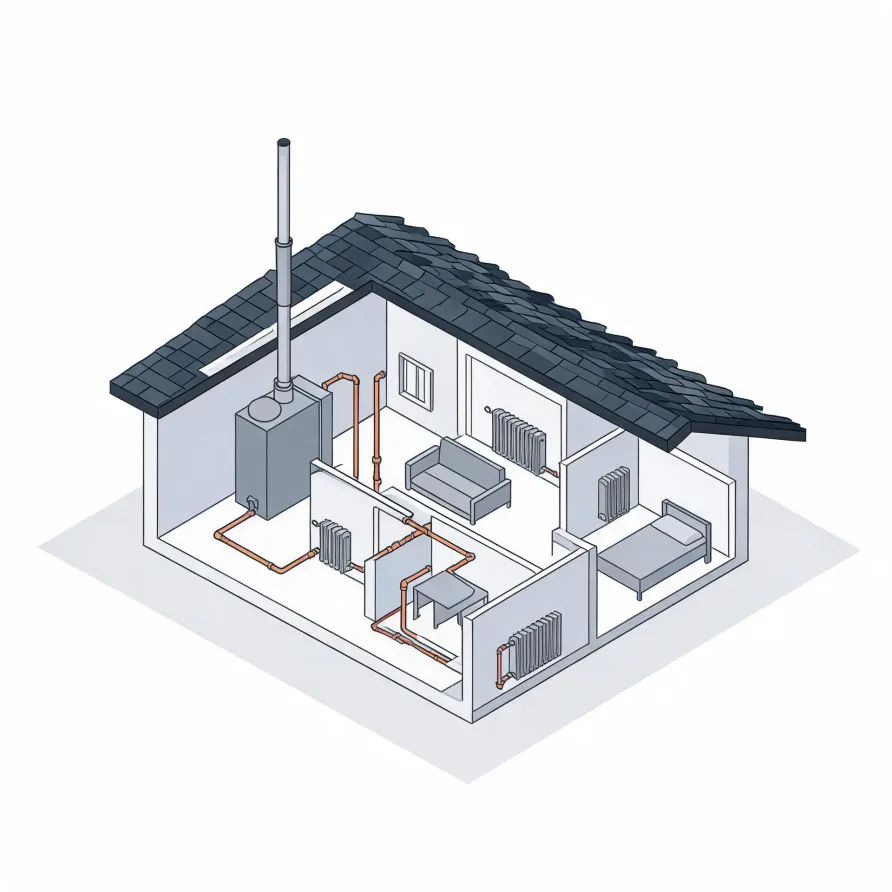
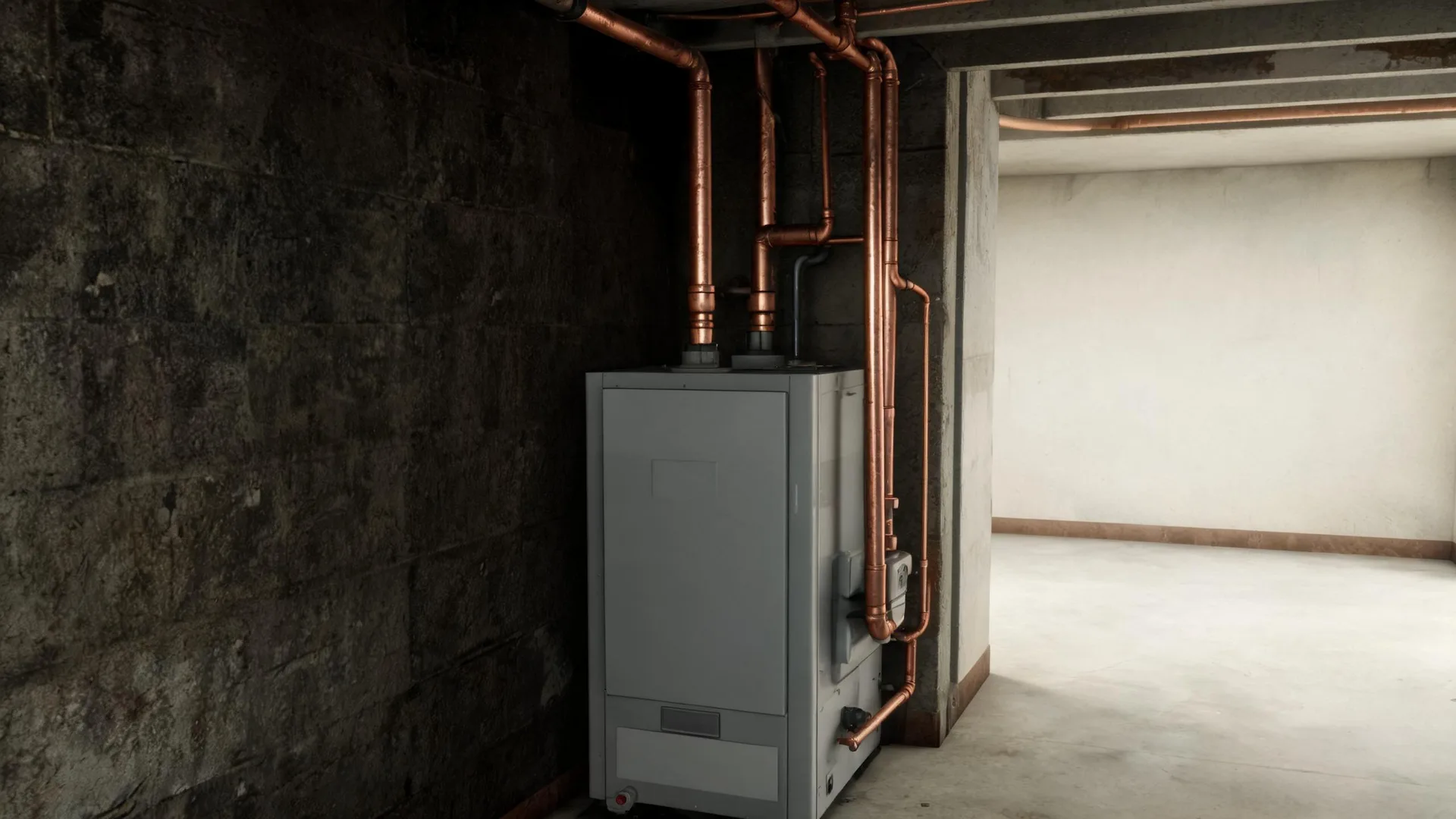
The boiler itself sits in the basement or a utility room and is the piece a contractor goes to first. It heats water and sends it out through the system. When heat stops reaching a room or the system short-cycles, the burner assembly, heat exchanger, or pressure vessel inside the boiler is usually where the problem starts.
From the boiler, supply pipes carry hot water to radiators or radiant floor loops throughout the house, and return pipes bring the cooled water back. The circulator pump moves that water through the loop, and the expansion tank absorbs pressure changes as the water heats. A failed pump or a waterlogged expansion tank shows up as uneven heat or banging pipes.
The drawing shows a typical boiler layout, and a licensed contractor determines which components and conditions apply to your specific system.
Find a contractor in Cache CountyCache County, Utah, by the numbers
103 severe weather events were recorded in Cache County, Utah between 2015 and 2024.
NOAA National Centers for Environmental Information, Storm Events Database, bulk CSV export, events 2015-01-01 through 2024-12-31.Half the homes in Cache County, Utah were built in 1992 or earlier (2020-2024 ACS 5-year).
U.S. Census Bureau, 2020-2024 American Community Survey 5-Year EstimatesCache County, Utah holds 46,665 housing units (2020-2024 ACS 5-year).
U.S. Census Bureau, 2020-2024 American Community Survey 5-Year EstimatesOwners occupy 63.7% of the occupied homes in Cache County, Utah (2020-2024 ACS 5-year).
U.S. Census Bureau, 2020-2024 American Community Survey 5-Year EstimatesCodes & Standards Governing Boiler and HVAC Repair in Cache County, Utah2 sourced rules and standards
Licensing and Legal Requirements in Cache County, Utah
Utah’s contractor licence does not reach alteration, repair, remodelling or improvement of a building worth less than $7,000 in labour and materials together, counting every change and addition to the agreed work — though the plumbing and electrical trades are pulled back under licensure even below that figure.
Utah requires a state licence before engaging in a licensed construction trade or contracting activity, and HVAC contractor is one of the licence classifications the state issues.
Severe Weather Events in Cache County
Boilers work harder when the weather outside pushes conditions to extremes, and that workload accumulates over time. Repair needs in Cache County track with what the climate here actually demands from the equipment.
103 severe weather events, 2015–2024. Source: NOAA National Centers for Environmental Information, Storm Events Database.