Tell us about the job
Takes about a minute. No obligation.
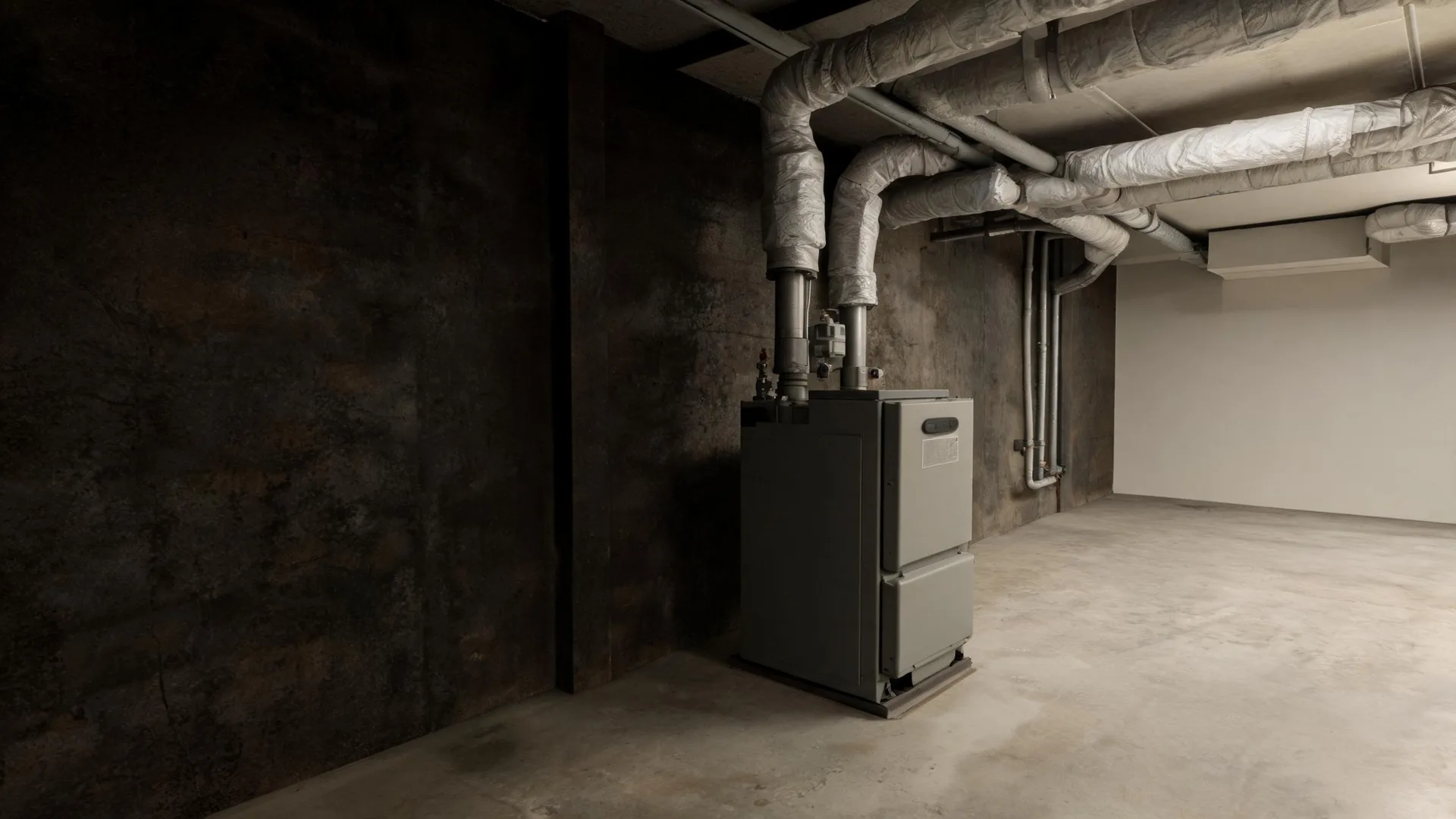
A contractor called out to repair a boiler here starts by looking at the parts that cycle every time the system fires: the burner, the ignition assembly, and the heat exchanger. Homes in Washington County, UT run heat about eight months a year, from October through May. That load falls almost entirely on those components, and wear shows up there first. A heat exchanger that has been expanding and contracting through that many firing cycles develops stress at the welds and seams, which is where a contractor looks before moving anywhere else on the unit.
Half the homes in Washington County, Utah were built in 2003 or earlier (2020-2024 ACS 5-year). For a county where much of the housing was built recently enough to have been fitted with infrastructure sized for current heating equipment, the building itself is rarely what drives the scope of a boiler repair. A contractor who opens the unit will find that what shapes the job is inside the system: the condition of heat exchangers, the state of seals and valves, and whether the parts a given boiler takes are still in supply. The house is not the variable that decides how the repair goes.
The Parts of a Boiler a Contractor Checks First
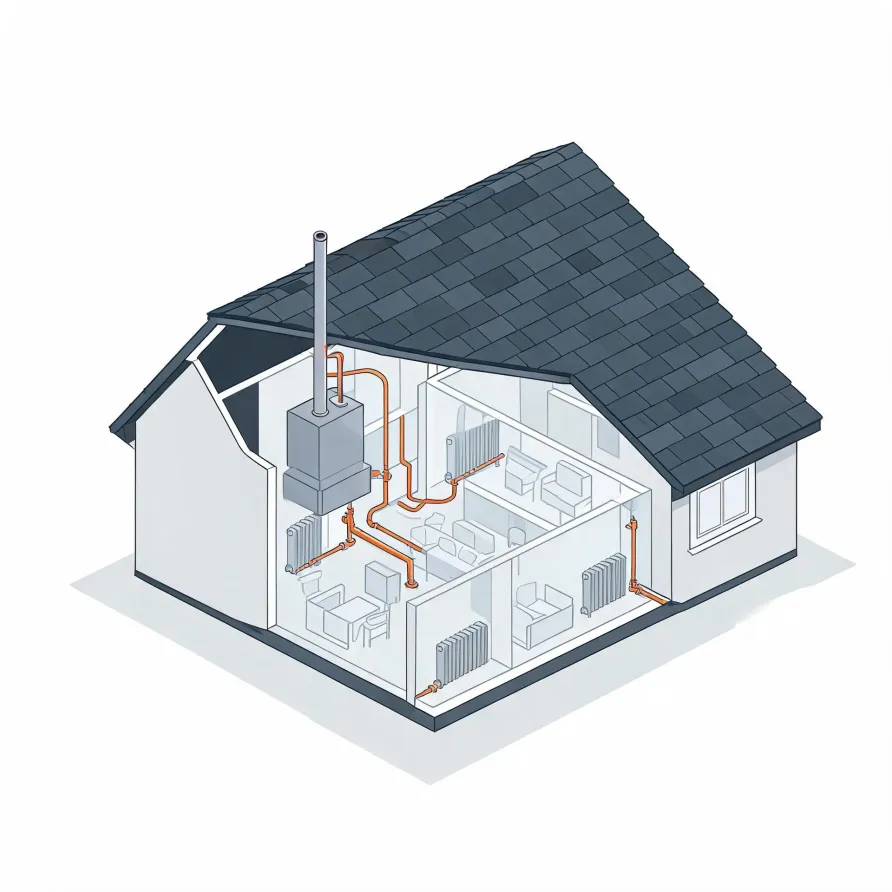
The boiler itself sits in the basement or a utility room and is the unit a contractor goes to first. It heats water and sends it out under pressure. When the system runs short cycles, produces no heat, or makes knocking sounds, the burner assembly, heat exchanger, or pressure relief valve inside that unit is usually where the problem starts.
From the boiler, pipes carry hot water to radiators or baseboard units in each room, then return the cooled water back. The circulator pump, which drives that loop, and the expansion tank, which manages pressure changes as water heats and cools, both sit close to the boiler and are common stops in any repair diagnosis.
The drawing shows a typical layout, and a licensed contractor will determine which components and conditions apply to your specific system.
Find a contractor in Washington CountyWashington County, Utah, by the numbers
110 severe weather events were recorded in Washington County, Utah between 2015 and 2024.
NOAA National Centers for Environmental Information, Storm Events Database, bulk CSV export, events 2015-01-01 through 2024-12-31.Half the homes in Washington County, Utah were built in 2003 or earlier (2020-2024 ACS 5-year).
U.S. Census Bureau, 2020-2024 American Community Survey 5-Year EstimatesWashington County, Utah holds 82,189 housing units (2020-2024 ACS 5-year).
U.S. Census Bureau, 2020-2024 American Community Survey 5-Year EstimatesOwners occupy 71.6% of the occupied homes in Washington County, Utah (2020-2024 ACS 5-year).
U.S. Census Bureau, 2020-2024 American Community Survey 5-Year EstimatesBoiler Repair Rules & Standards on the Books for Washington County, Utah2 sourced regulations and standards
Licensing and Legal Requirements in Washington County, Utah
Utah’s contractor licence does not reach alteration, repair, remodelling or improvement of a building worth less than $7,000 in labour and materials together, counting every change and addition to the agreed work — though the plumbing and electrical trades are pulled back under licensure even below that figure.
Utah requires a state licence before engaging in a licensed construction trade or contracting activity, and HVAC contractor is one of the licence classifications the state issues.
Weather Stress on HVAC Equipment in Washington County
Boilers work harder when the weather outside puts pressure on a building's thermal envelope. How much strain a system absorbs over time is a local question, and the record of severe weather events in Washington County gives a concrete picture of what boilers here are asked to withstand.
110 severe weather events, 2015–2024. Source: NOAA National Centers for Environmental Information, Storm Events Database.