A local installer who puts in boilers gets your project.
A gas boiler in Utah typically runs 15 to 20 years, sometimes longer if it's been looked after. The dry climate here is easier on a boiler than a humid one would be, since there's less moisture working on the cabinet and the flue. But age alone doesn't tell you where yours stands. A boiler installed in a home with hard water or one that's been left to run without any attention wears differently than one that's been maintained since day one.
If yours is getting old, or if it's already started acting up, the question isn't really how long boilers last in general. It's whether this one, in your house, still makes sense to keep running, or whether you're better off planning for what comes next.
That's a judgment call, and it's not one you can make from a chart. It takes someone standing in front of the unit, looking at the burner, checking the heat exchanger, seeing what kind of shape the piping is in. A contractor who installs and services boilers across Utah every winter has seen what tends to go wrong first in units your boiler's age, and what's worth fixing versus what's a sign to start planning a replacement.
This page can connect you with one licensed boiler contractor local to your part of Utah, someone who'll look at your actual system rather than guess from a number. You won't hear from a handful of different companies all competing for the job. Just the one contractor, reaching out to go over what they see and what your options are.
If your boiler is still young, that visit might just confirm you've got years ahead of you. If it's older, it's worth knowing now what your choices are, rather than finding out in the middle of a cold week when the thing finally quits.
A gas boiler in Utah usually lasts 15 to 20 years. Most homes here run on gas heat, and a boiler that's sized right and gets yearly service can sometimes push past that. The dry summers help too. Less humidity means less corrosion working on the heat exchanger and the vent pipe over time, which is one reason boilers here often outlast the same unit in a wetter state. What ends a boiler's life is usually the heat exchanger cracking or the cabinet rusting through from the inside, not any one part failing. Once a boiler passes 15 years, a breakdown tells you something different than it would on a 5 year old unit. It's worth asking whether the next repair is worth paying for, or whether that money should go toward a new system instead. If your boiler came with the house, finding out its age is the first step to answering that.
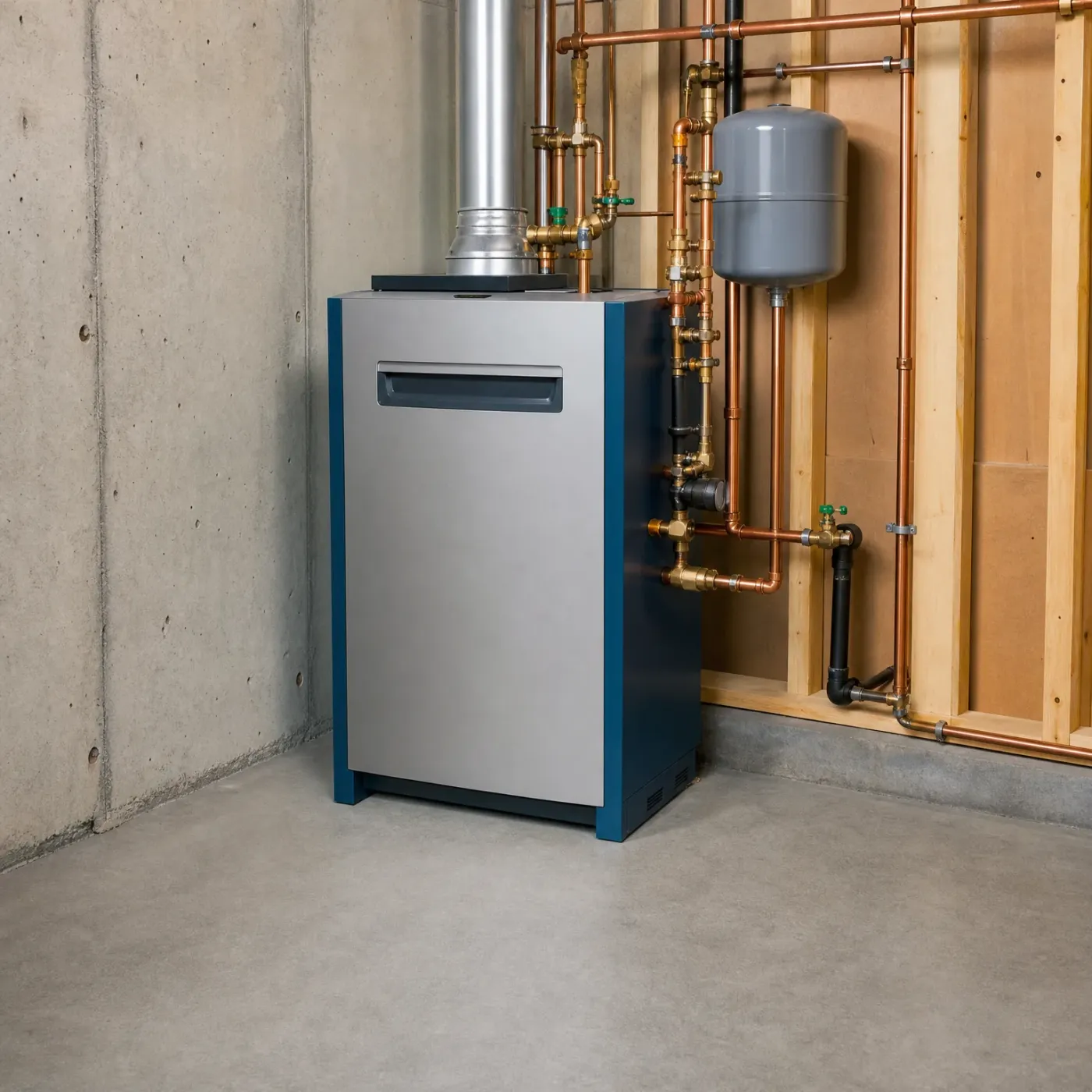
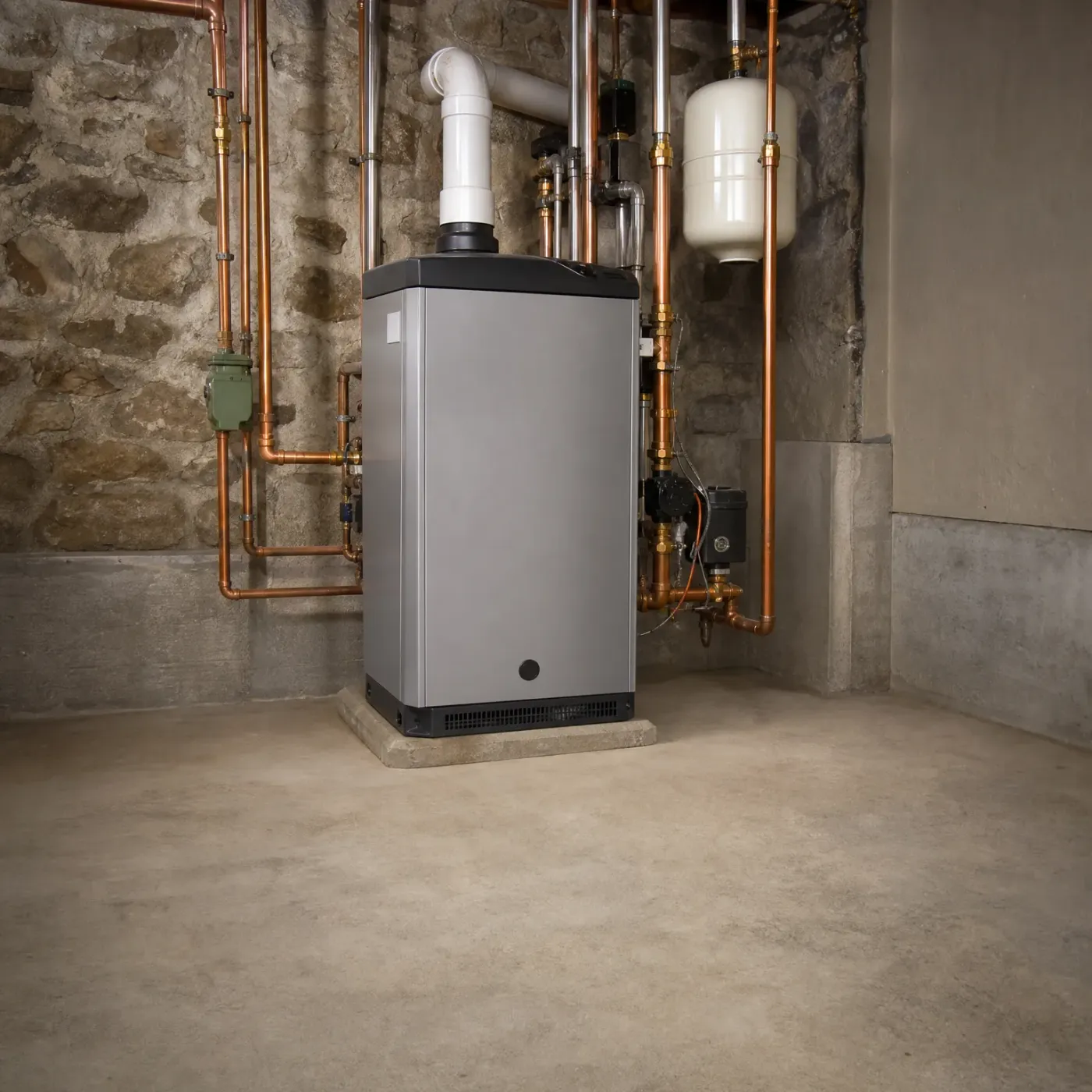
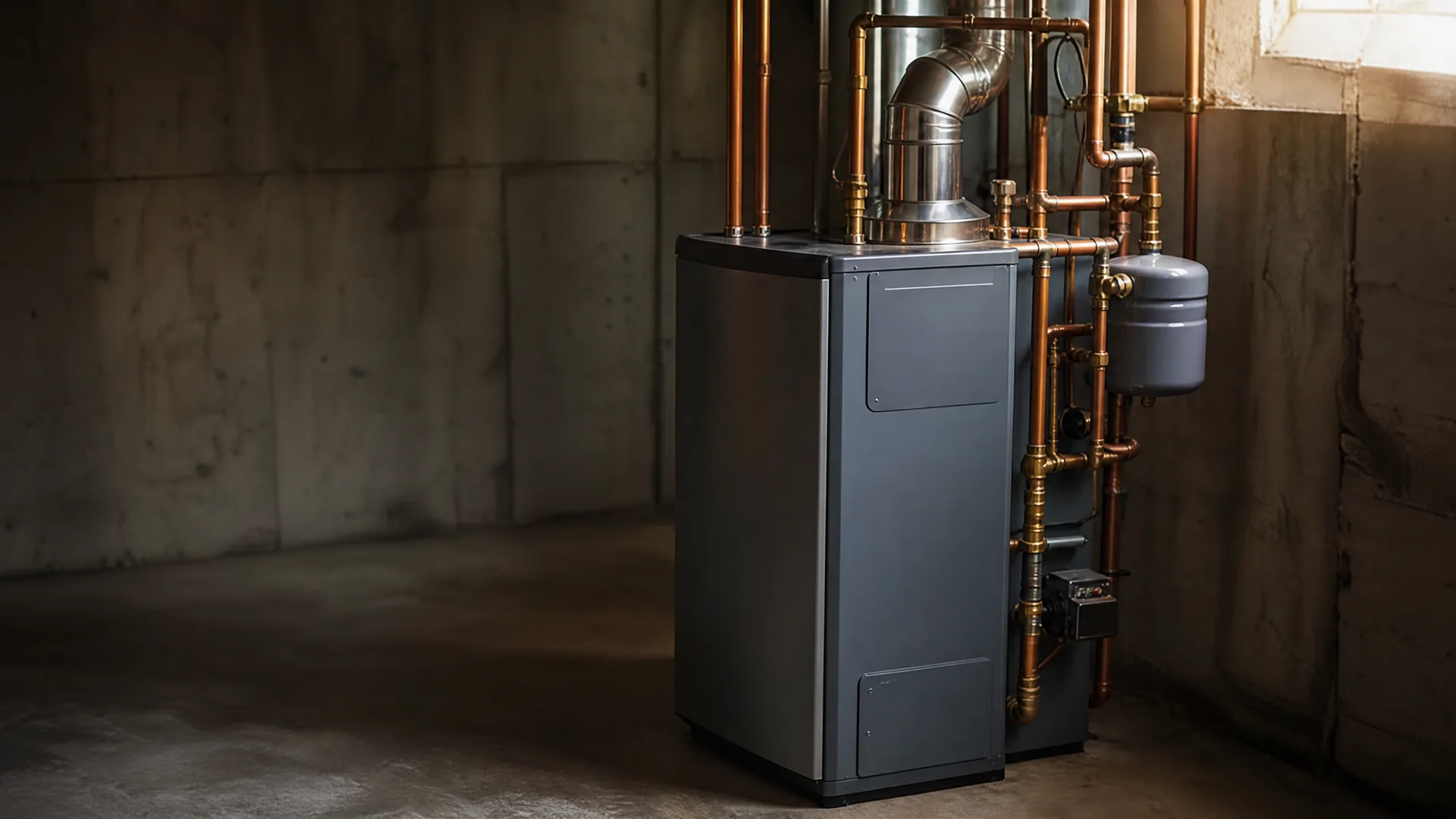
A boiler like this one, with clean copper lines and solid fittings, is still heating the water evenly and holding pressure the way it should.
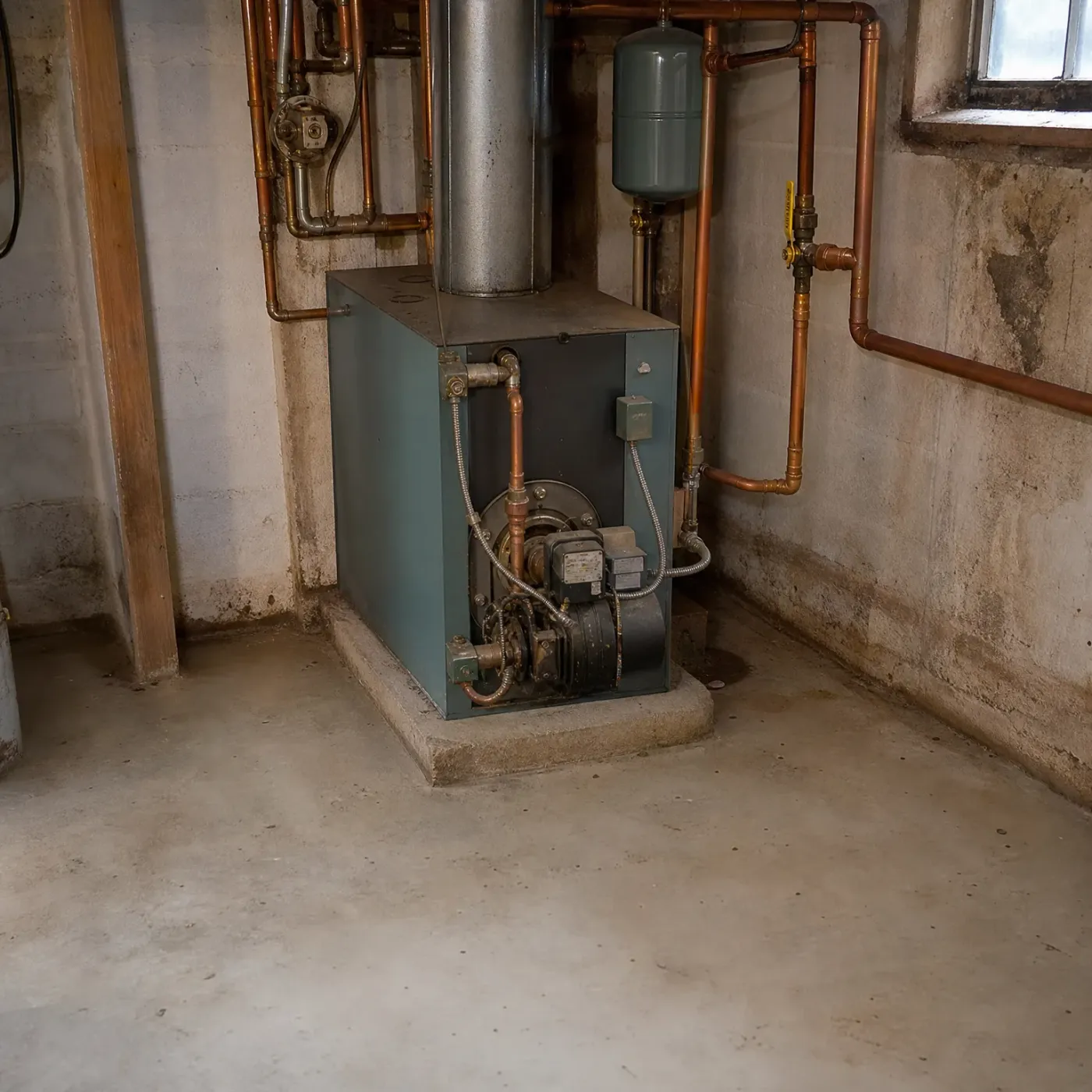
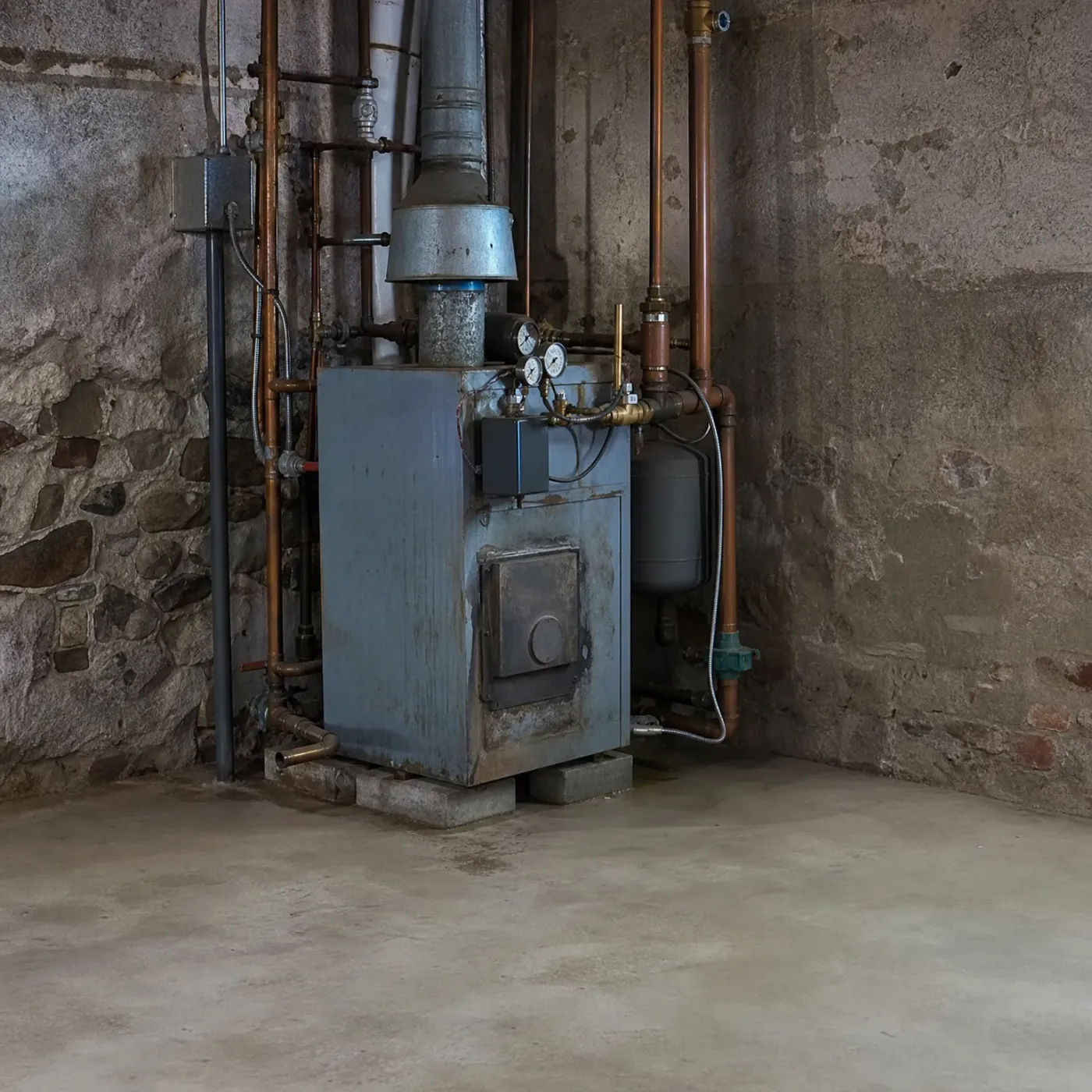
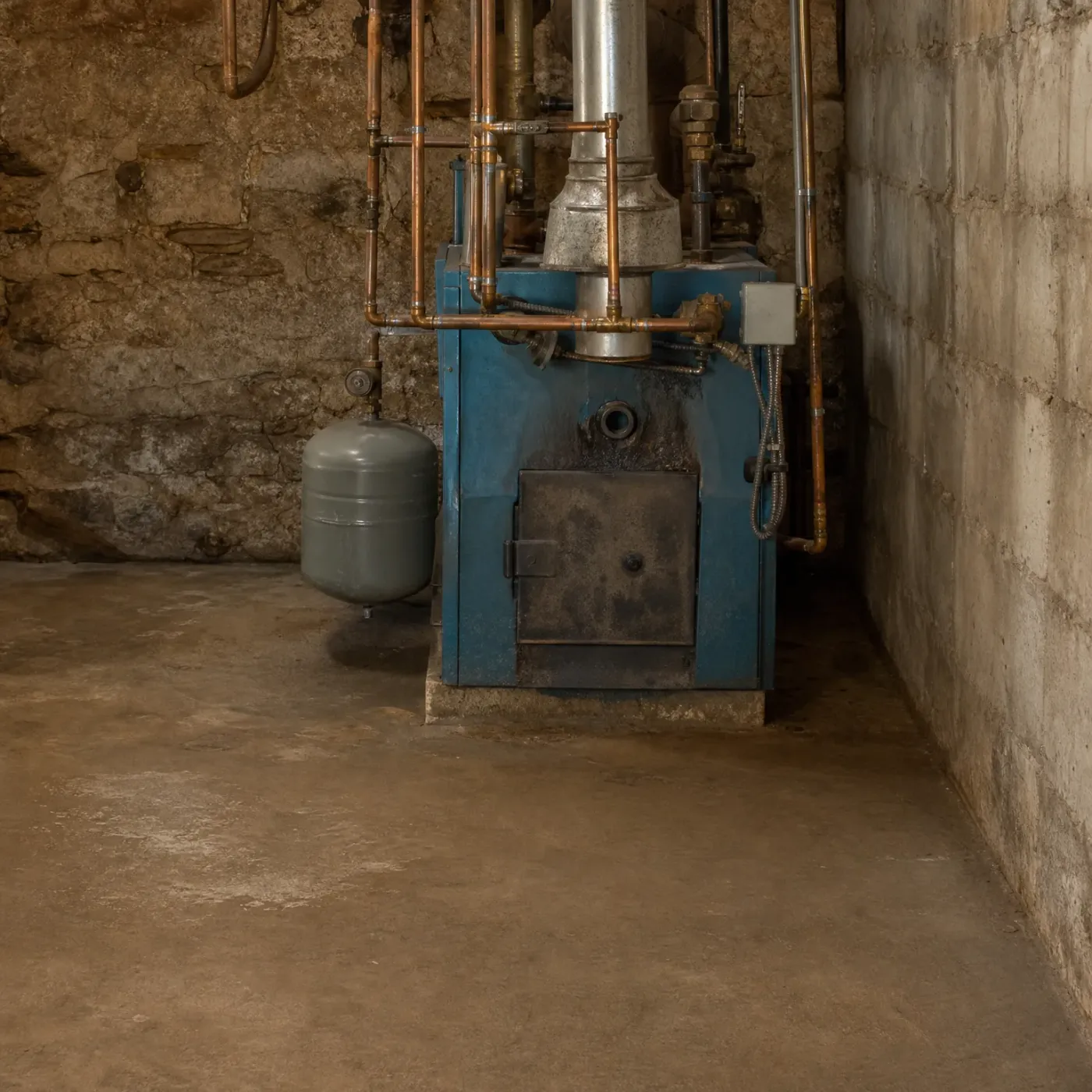
An oil-fired boiler with copper piping and an aging expansion tank like this one is a sign the system is closer to a replacement conversation than a repair.
Is your boiler starting to show its age?
You might hear it kick on louder than it used to, or run longer before the house actually feels warm. Some rooms heat up fine while others stay cold no matter what the thermostat says. You may notice water pooling near the base, or a rust color around the fittings and the tank. A pilot that won't stay lit, or a burner flame that looks yellow instead of blue, both point to something wrong with the combustion, not just old age. Left alone, a boiler in this shape can crack a heat exchanger or leak carbon monoxide into the house. If yours is doing any of this, it's worth having someone look at it before winter puts it to the test.
Running the way it should
This is a boiler doing its job. The pipes and fittings are clean, the pressure gauge reads where it should, and the expansion tank is holding its charge. A system like this is heating water evenly and venting the way it was installed to. Nothing here needs more than a yearly look.
Past its working life
This is what the end looks like. The firebox door is corroded through, and a cabinet in this shape usually means the heat exchanger behind it isn't far off. Once rust gets this far, patching one part just means the next one fails. A boiler here is a candidate for replacing, not repairing.
What actually fails first in a boiler that's getting old?
It's a fair question once you've had the boiler a while. You're not asking for a repair quote, you want to know what part gives out before the rest, so you know what to watch for and what a contractor is actually checking when they come look at it.
The heat exchanger usually goes first
The heat exchanger takes the heat from the burner and passes it to the water, and it's the part doing the most work every cycle the boiler runs. Over years of heating and cooling, the metal expands and contracts enough times that small cracks start to form. Once that happens, the exchanger either leaks or stops transferring heat the way it should, and at that point replacing just that part usually costs close to replacing the whole unit. Circulator pumps and zone valves fail too, but those get swapped out on their own without touching the rest of the system. The heat exchanger is the one that tends to decide how much longer the boiler has.
1
Cold water enters and the sensor checks the temperature.
2
The burner lights and heats water in the heat exchanger.
3
A circulator pump pushes hot water out to the radiators or loops.
One installer gets your project, so there's no bidding war over it.
Asking costs nothing, and the choice to hire stays yours.
Why dry air isn't the whole story
Utah's dry summers go easy on the cabinet and the flue, but the water inside the boiler doesn't care what the air outside is doing. Minerals in the fill water settle in the heat exchanger over years, and that scale builds up whether the system sits in Logan or St. George. A boiler that never gets drained or checked can scale up early and lose efficiency long before the 15 year mark, no matter how dry the climate is. The climate helps the outside of the unit. What happens inside still depends on the water and how often someone looks at it.
The pressure gauge tells you something
A boiler holds water under pressure, usually in a narrow range the manufacturer sets. That number doesn't drift much in a system that's sealed and working right. When a boiler starts needing water added every few weeks, or the pressure gauge creeps down between fills, something in the loop is letting water out, whether that's a fitting, the expansion tank, or a seal inside the unit itself. It's one of the few things you can check yourself without any tools, and a boiler that holds steady pressure month to month is usually one that's still got years left in it.
Before you get your boiler installationAfter you get your boiler installation
Winter nights average 21°F statewide
Nights in the 20s mean your boiler runs long stretches after dark, not just short bursts in the morning. That's steady work for the circulator pump and heat exchanger for months at a time. A system that's getting old may start to lag behind on nights like these before you notice any other sign.
NOAA nClimDiv 1991-2020 county normals weighted by homes
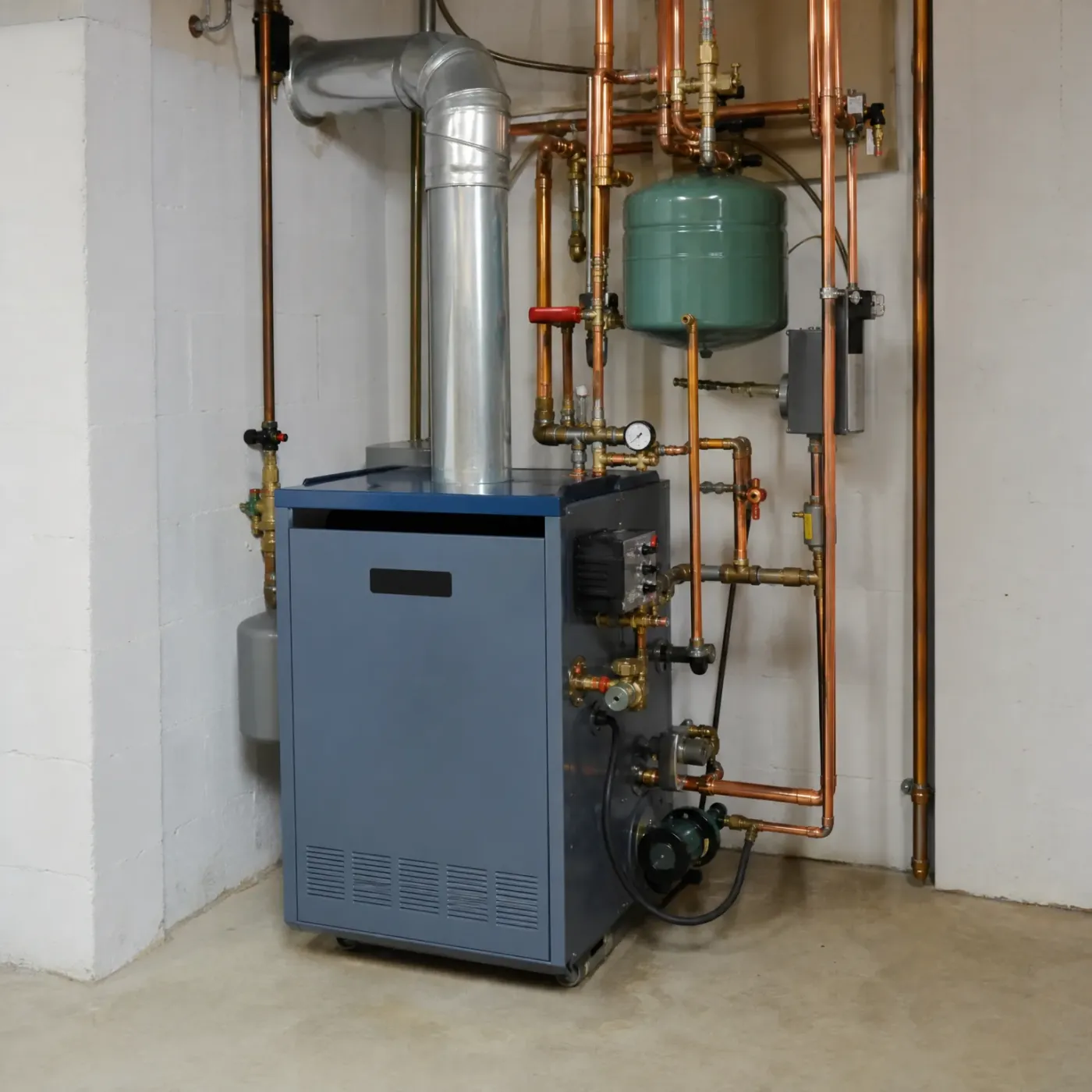
Doing what it's built to do
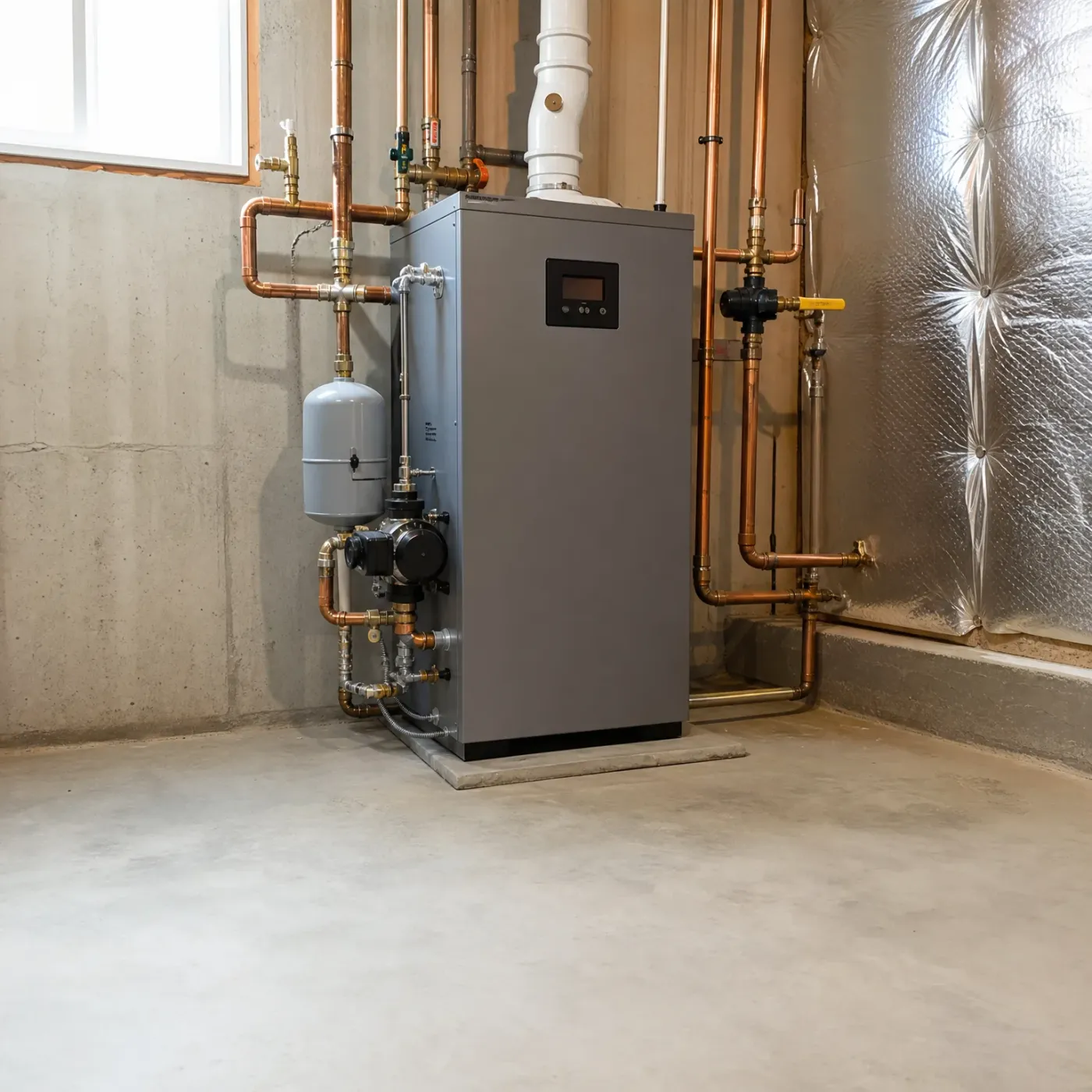
This condensing boiler sits clean against the wall, copper lines tight, the expansion tank and circulator pump holding their place. A setup like this is pulling heat out of the flue gas instead of sending it up the vent, which is why newer units run so efficient.
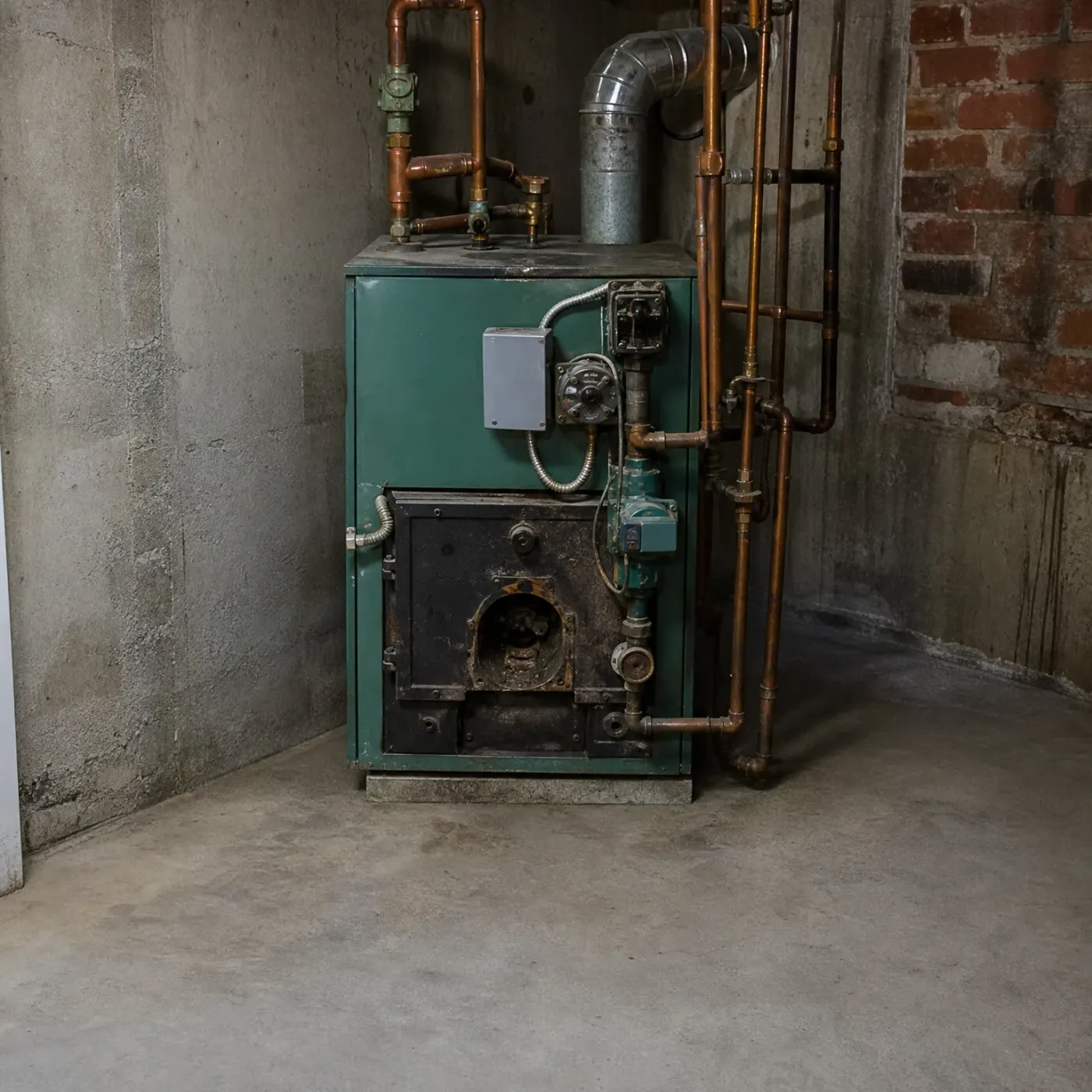
Running past its years
Cast iron like this was solid when it went in, but the access door tells you what's been happening inside. Corrosion there usually means it's working its way through the burner compartment too, and a flue that size on a boiler this worn is pulling more gas than it's giving back in heat.
Repair It or Replace It
Keep repairing
A circulator pump or igniter replacement usually runs a few hundred dollars, far less than the cost of a new boiler.
If the heat exchanger itself is still sound, the rest of the system can often be kept running with targeted fixes.
A boiler that's still under 15 years old and has been serviced yearly is usually a better candidate for repair than replacement.
Repairs let you spread cost out over several smaller bills instead of one large one.
If only one room runs cold or the system is just noisier than it used to be, that's often a single part, not the whole unit.
Replace now
A boiler past 15 to 20 years is working against scale and wear in parts that can't be cleaned out, only replaced.
Once the heat exchanger itself is leaking or cracked, no repair fixes that, the whole unit has to go.
A new condensing boiler pulls more heat out of the flue gas than an old one ever could, which matters on long cold nights.
If a contractor is already out for a second repair in one winter, that's usually a sign the next part is close behind.
Installing now means you choose the timing, instead of replacing in an emergency when the old one quits in January.
Statewide, winter nights average 21°F, according to the National Weather Service. That's cold enough that your boiler isn't cycling on and off for a few minutes at a time, it's holding a steady burn for hours after the sun goes down. A heat exchanger that runs that long, that often, wears differently than one that only fires up here and there. If your boiler is getting older, this is when you'll notice it falling behind, taking longer to bring rooms up to temperature or running well past midnight to keep the house even.
NOAA nClimDiv 1991-2020 county normals weighted by homes
Fifteen to twenty years, less if the water's been hard on it
A gas boiler in Utah lasts 15 to 20 years in most homes, and the number that actually decides where yours falls is how the heat exchanger has held up against scale, not how many winters it's seen. If yours is in that range and something's finally lagging behind, that's worth having someone look at before another cold stretch rolls through.
A local contractor who works on boilers all season knows what fill water and mineral buildup do to a heat exchanger around that age, and can tell you quickly whether your system is worth repairing or past it. Once you request a match, one contractor who serves your area reaches out, so you're dealing with a single call instead of sorting through several.