Skip collecting and comparing quotes for the new boiler.
A boiler that's starting to fail doesn't always die all at once. It short cycles, it loses pressure, it keeps the same rooms cold while it runs longer and longer to do less. At some point you're not fixing a boiler anymore, you're deciding whether to keep paying to patch one that's done most of its work already.
That decision is harder in Utah than the repair itself. Gas is how most homes here heat, so a boiler that's losing efficiency is burning more of it for less heat, through a winter that asks a lot of the system. Power here is cheap, which doesn't change the gas side of the math, but it's worth knowing which costs are fixed and which ones move with an old boiler's condition.
Finding out whether yours is worth repairing usually means calling around. You describe the symptoms to one company, get a quote, call another, describe it again, get a different answer, and try to compare two bids that priced different things. That part is the slow part, not the work on the boiler itself.
This page connects you with one licensed contractor local to Utah, someone who services boilers in homes like yours every winter and has a good sense of what tends to go first and when a repair stops making sense. You explain the problem once. No list of companies calling you back, no comparing quotes that don't match up. Just the one person who'll actually look at it.
What follows is what's worth knowing before that conversation: how to tell whether your boiler is near the end, what replacement actually involves, and what matters about doing it in Utah. The button below is how you get the contractor. The rest of this page is how you get ready to talk to him.
Should I repair my old boiler or just replace it?
You've had a repair bill or two already, and now the question is whether another one makes sense or whether the boiler is just done. It's a hard call when the thing still runs, even if it's not running well. Most people want a straight answer before they spend money on either path, especially with winter coming and the heat needing to work when it's cold out.
Repair it if the boiler is under 15 years old and the damage is one part. Replace it past that age.
A boiler's major parts, the heat exchanger, the circulator pump, the controls, are built to last close to that long, so a failure before 15 years is usually one part giving out, not the whole unit. Past that point the same repair tends to be followed by another one somewhere else within a year or two, because the rest of the boiler is aging at the same rate even if it hasn't failed yet. Gas heats most homes in Utah, and a boiler that age is running on older gas combustion technology than what's sold now, so a repair this winter can easily be followed by a bigger one the next. Replacing it instead means you stop paying to patch a system that's already partway through quitting on you.
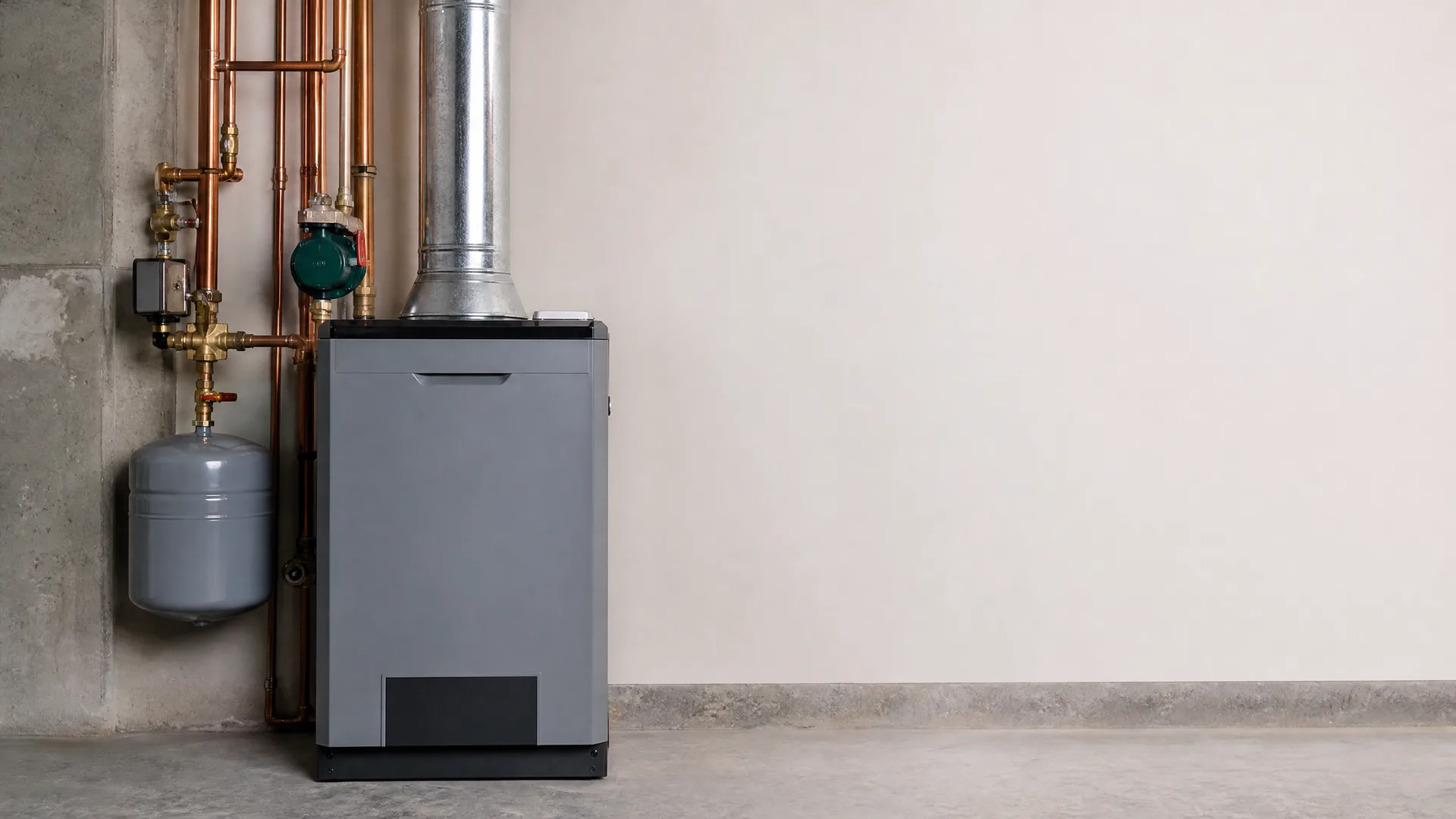
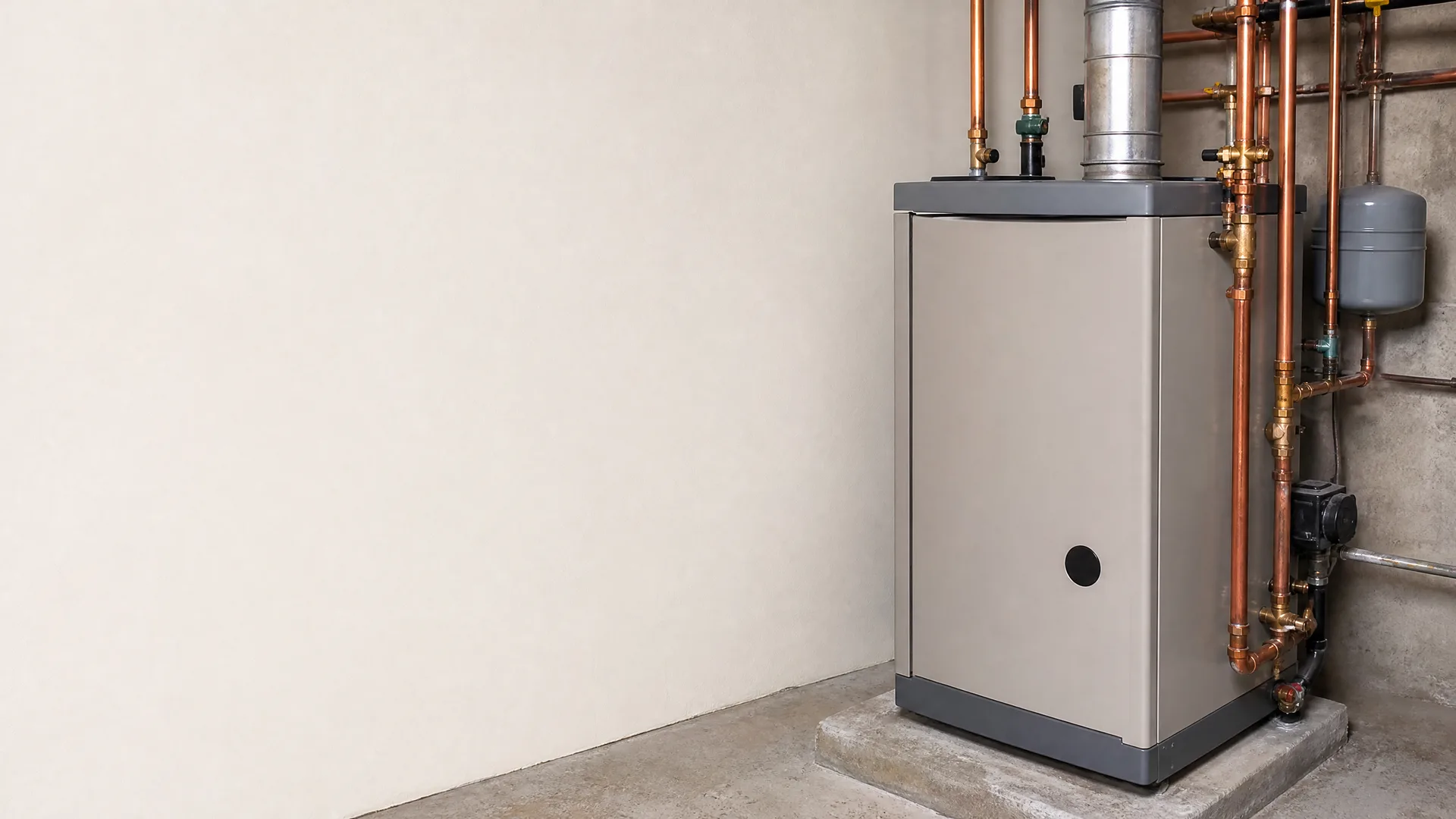
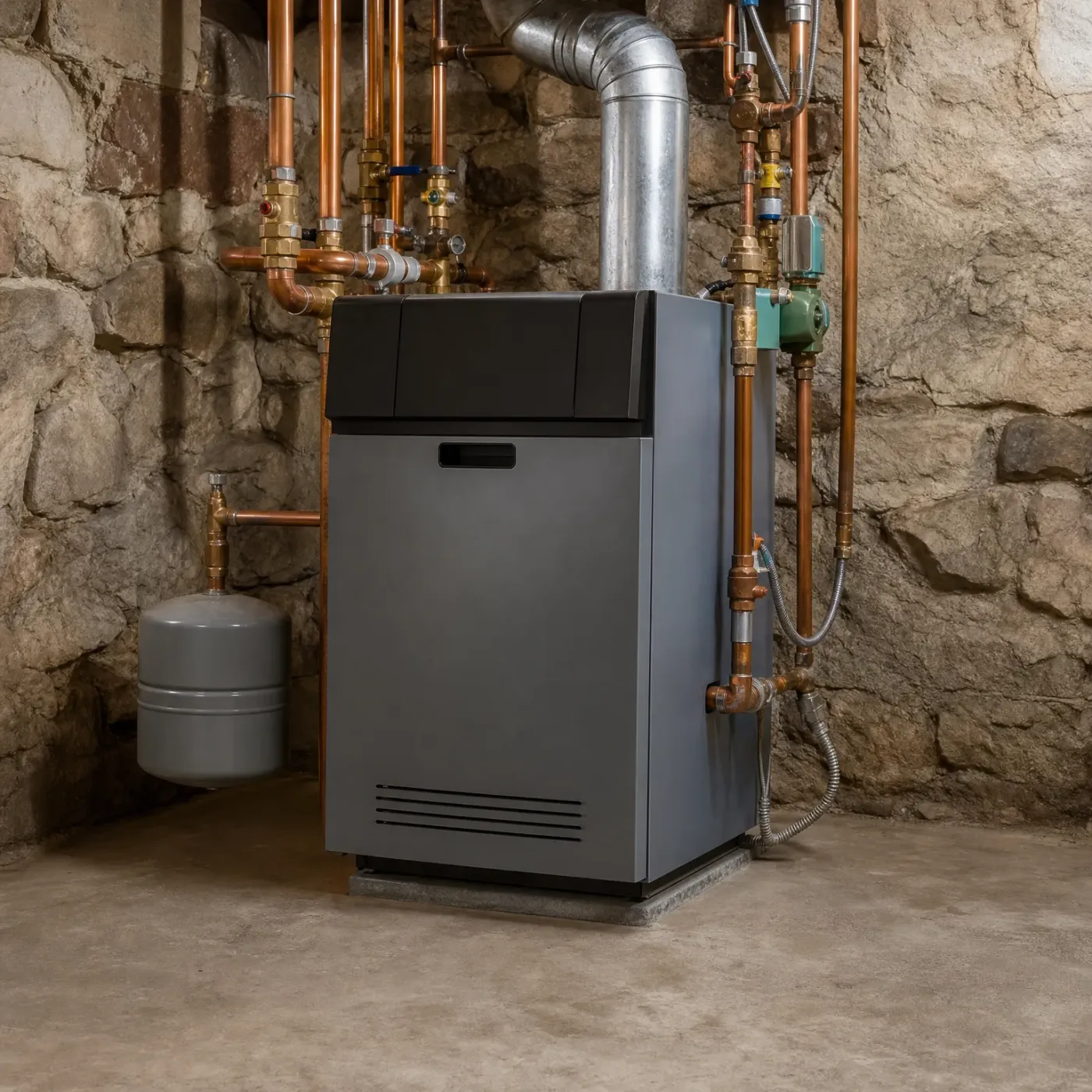
Before you get your boiler installationAfter you get your boiler installation
A boiler doesn't push air through ducts. It heats water in a closed loop and sends it out to radiators or baseboards, then draws it back to be heated again. That loop depends on steady pressure, and the expansion tank is what holds things steady as the water heats and swells. When that tank starts to fail, you see it as pressure that won't hold, and a repair aimed somewhere else won't touch it. The circulator pump is the other piece doing real work. It moves the hot water through the loop, and when it wears out, heat stops reaching some rooms even though the boiler is still running. Pressure loss can also mean a leak somewhere in the pipes, which is why a repair on the boiler itself sometimes changes nothing. Short cycling, where the boiler shuts off too soon, usually comes from a bad aquastat or sediment collecting in the heat exchanger. And a gas boiler still runs on electricity. The igniter and circulator both need power, so after an outage it needs that control board to reset before it fires again.
How a boiler actually fails
A boiler heats water in a sealed loop and pushes it through pipes to radiators or baseboards, not through ductwork like a furnace.
An expansion tank absorbs the water as it heats and expands, and a failing one is a common reason pressure keeps dropping.
The circulator pump is what actually moves the hot water through the system, and a worn one leaves some rooms cold while others stay warm.
Low water pressure often traces back to a leak somewhere in the loop, not the boiler itself, which is why repairs sometimes fix nothing.
Short cycling usually means the boiler is shutting off before it satisfies the thermostat, often from a bad aquastat or sediment built up in the heat exchanger.
A boiler running on gas still needs electricity to run its igniter and circulator, so it won't restart on its own after an outage without that control board resetting.
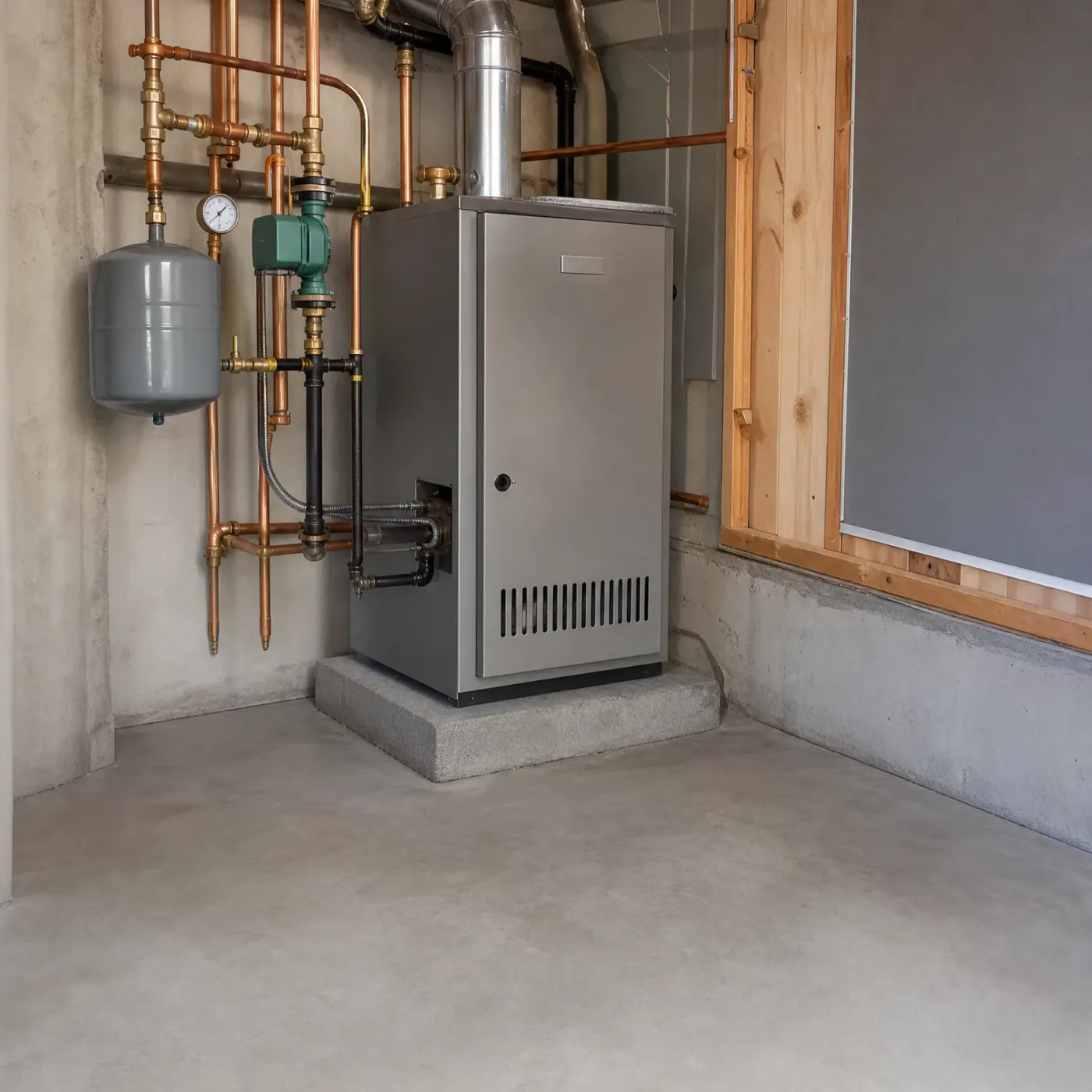
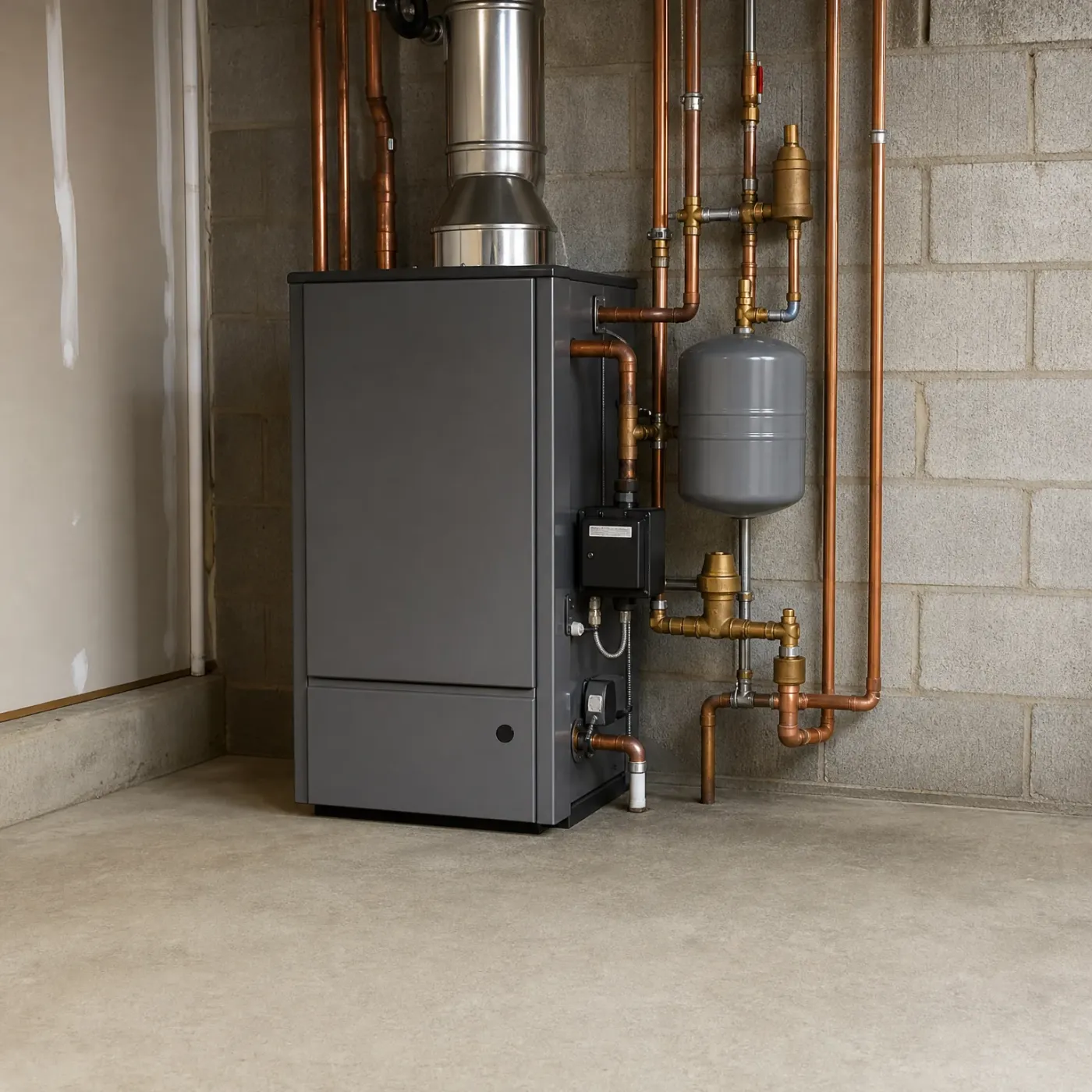
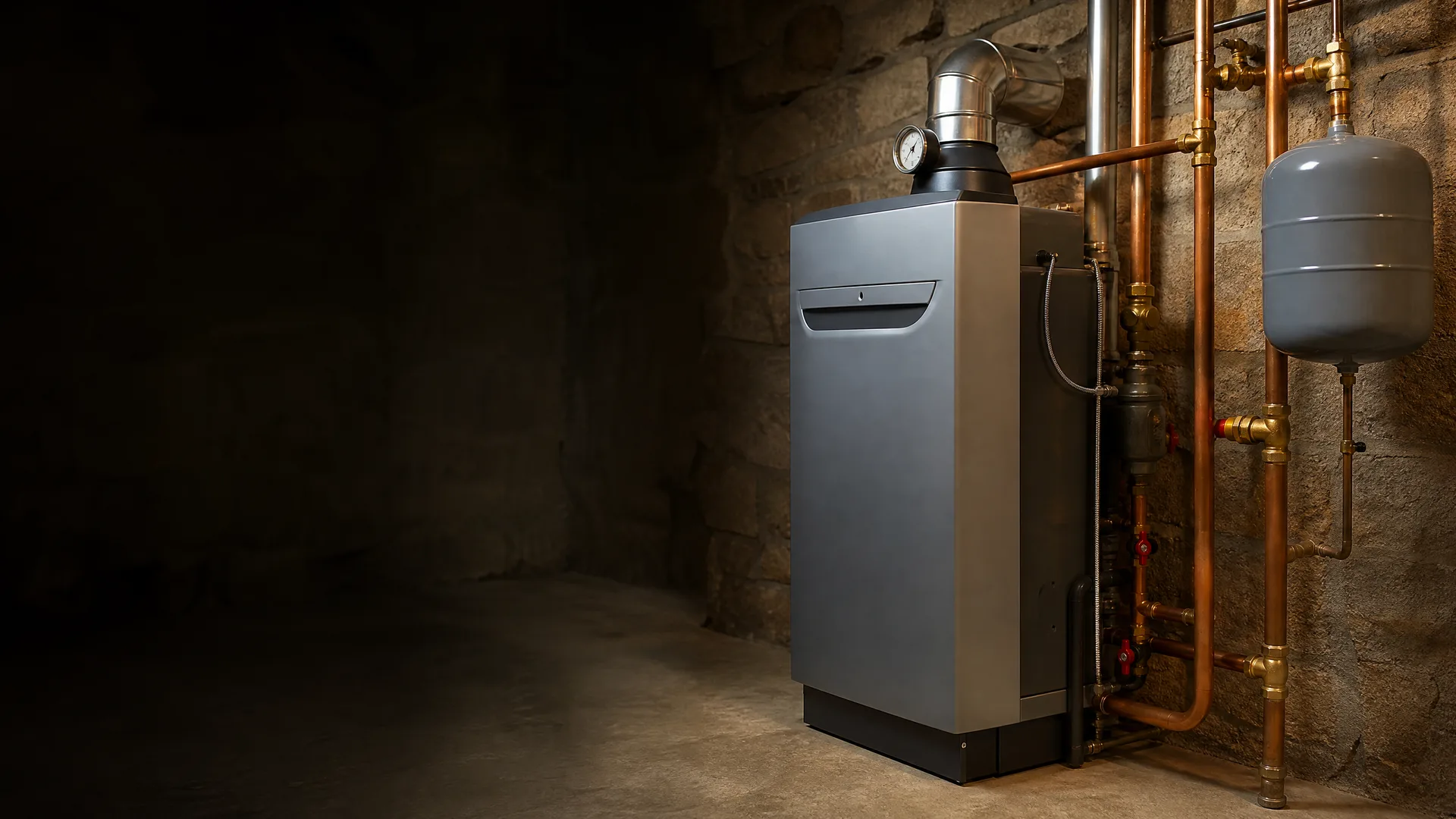
A boiler like this is holding its pressure and heating the loop evenly, with the expansion tank doing its job.
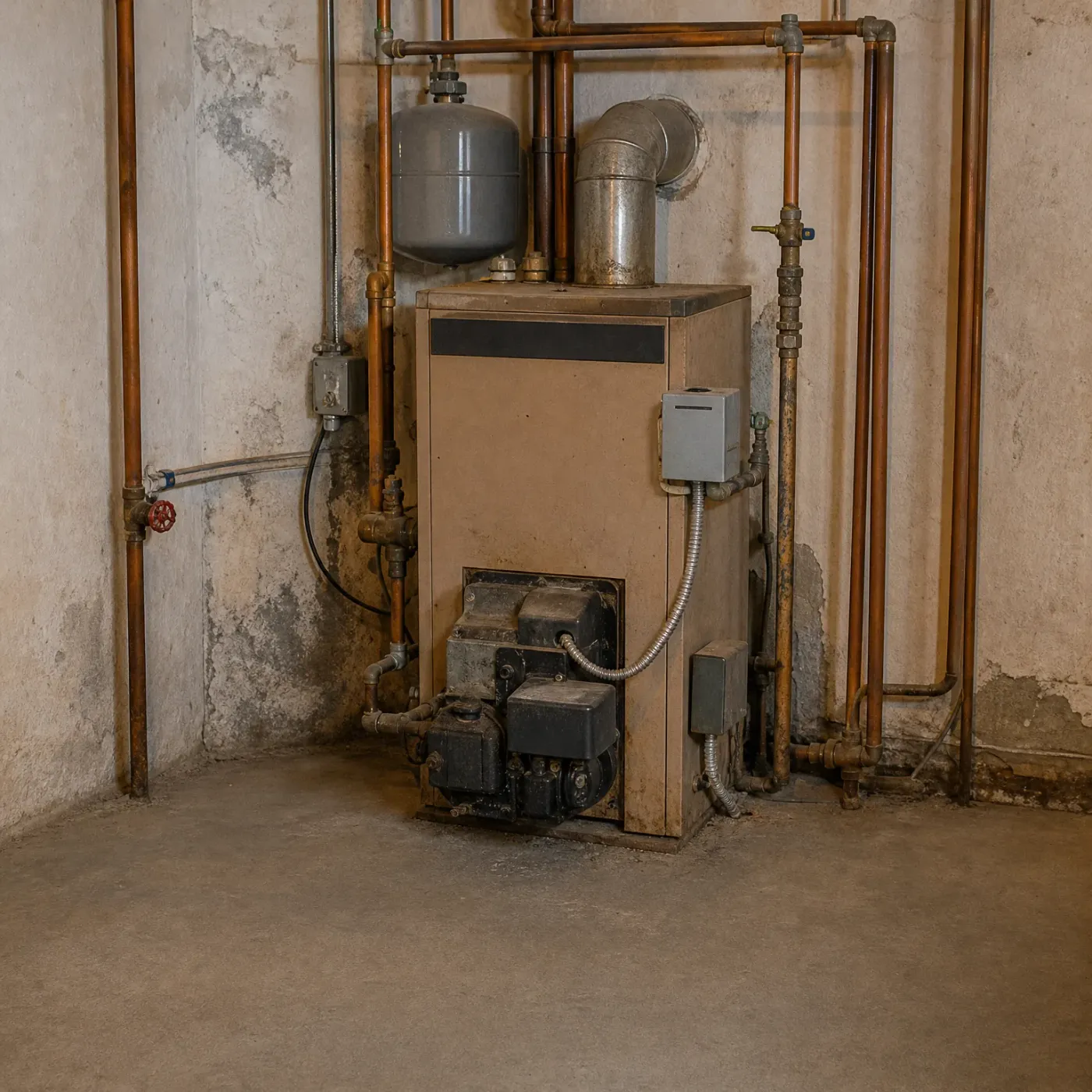
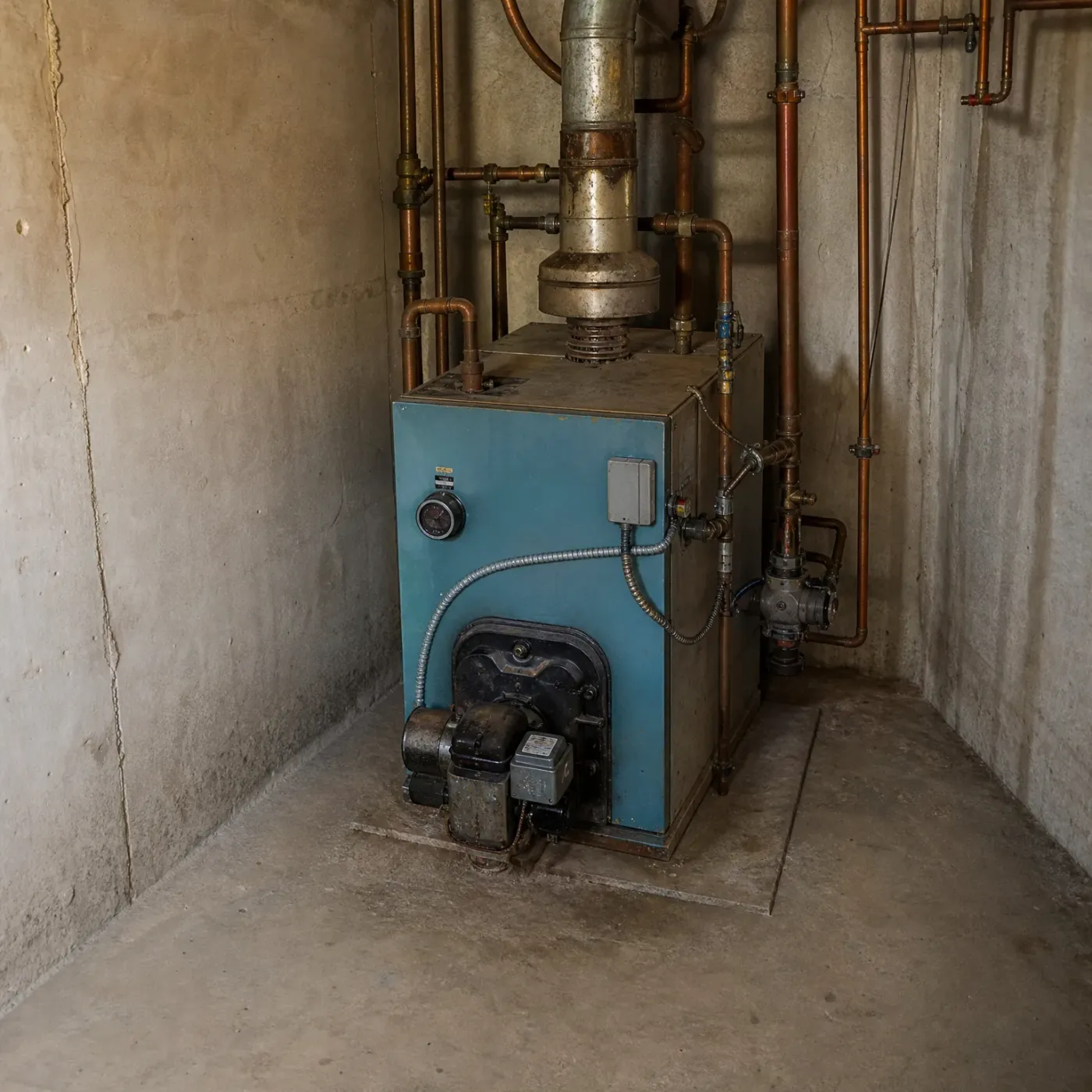
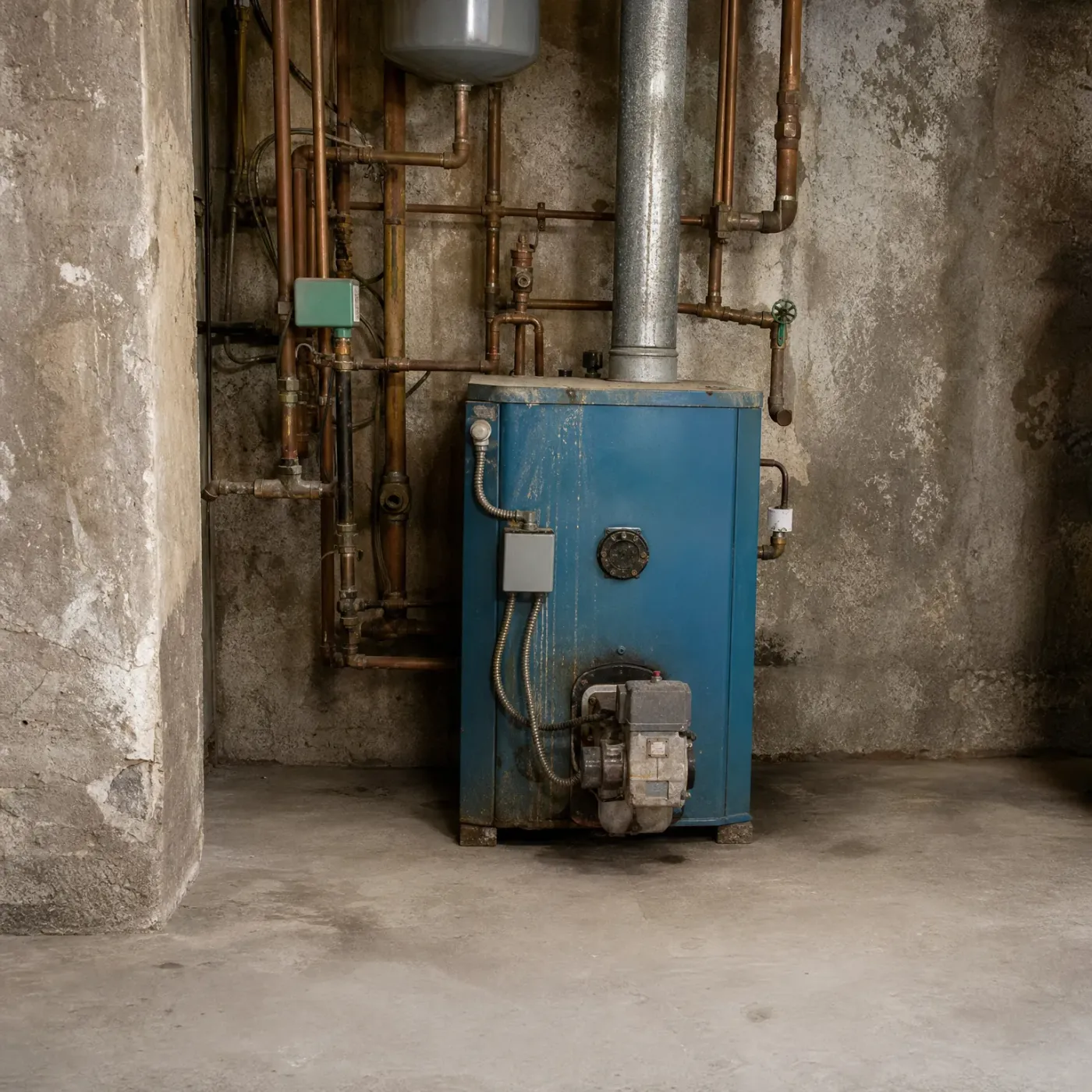
An old oil burner like this is working harder each winter, and parts for it get harder to find every year.
Winter nights average 21°F statewide, according to NOAA, and that's the stretch where a tired boiler shows its age. Short cycling gets worse in deep cold because the burner is firing more to hold the same temperature, and a boiler that's already losing pressure has less reserve to draw on when the loop has to work harder. You'll notice it as rooms that used to even out by morning staying cold longer, or the boiler running well past when it used to shut off. Instead of spending evenings calling around to different companies and repeating the same story about what your boiler's doing, you'd be talking to one local contractor who works on boilers all winter in this kind of cold and knows what tends to give out first.
NOAA nClimDiv 1991-2020 county normals weighted by homes
Your request goes to one pro, not a list of companies.
It costs nothing to send, and you don't have to hire anyone.
A boiler that's cycling on and off every few minutes is losing efficiency with every start, since each cycle burns gas to bring the heat exchanger back up to temperature before it can do any real heating.
A new boiler is sized and set up to run longer, steadier cycles, so it spends more of its time actually heating the house instead of restarting itself.
Repair the Boiler or Replace It
Repair
A repair makes sense if the boiler is holding pressure most of the time and the breakdown is one part, like an igniter or a failed circulator pump.
If the boiler is only a few years into its life, paying for the part and the labor usually costs less than starting over with a new unit.
A repair buys you another winter, but it doesn't fix a cracked heat exchanger or a block that's rusting from the inside.
Each repair on an aging boiler tends to be followed by another, since the parts around the one that failed are wearing at the same rate.
Parts for an older boiler can take longer to track down if the model isn't common anymore, which stretches out the time you're without heat.
Replace
Replacing makes sense once you're paying for a repair every heating season or the boiler can't hold pressure between visits.
A new boiler is sized for your home now, not for whatever the house needed when the old one went in.
Utah winters push a boiler hard for months at a time, and a new one is built to run that stretch without the short cycling that wears out a dying unit.
The upfront cost is more than a repair, but you stop paying for emergency visits on a unit that's already near the end.
A new boiler comes with a warranty on the parts most likely to fail, which an old unit running past its expected life doesn't have.
What you'll notice this winter
Some rooms stay cold while others heat fine, even with the thermostat set the same as always. You hear the burner kick on more often and for shorter stretches, and the house never quite catches up. On the coldest nights, when it's dropping into the twenties outside, you'll feel it first in whichever room is farthest from the boiler. That's the loop losing pressure or the burner struggling to keep up, and it tends to show up right when you need the heat most.
What it puts at risk
A boiler that's losing pressure or short cycling is burning more gas to make the same heat, and that shows up on the bill before anything else does. Keep running it past that point and you risk a bigger failure, like a cracked heat exchanger, in the middle of a cold snap instead of on your schedule. Gas is how most homes here heat, so a boiler that quits in January isn't a small inconvenience. Replacing it before that happens means you choose the timing, not the weather.
What an aging boiler is doing to your winter right now
Your gas bill is higher than it should be for the heat you're actually getting, because a boiler losing pressure fires more often and runs longer each time to push the same amount of hot water through the loop. Rooms that used to heat evenly now need a space heater to finish the job, and the radiators or baseboards never quite feel as warm as they used to. If the pressure keeps dropping between fills, that's water going somewhere, and it's worth having someone look before a small leak becomes a bigger one.
Finding the right contractor for a boiler swap isn't like calling around for a furnace. You need someone who actually works on hydronic systems in Utah, not just forced air, and who can size the new unit to your radiators and your house instead of just matching the old one. Getting matched with a local contractor who installs boilers every winter here means you explain the problem once, to someone who already knows what tends to fail first in a system like yours.
Working the way it should
This is what a boiler looks like when it's doing its job. Pressure holds steady, the expansion tank is doing its part, and the copper lines run clean to every radiator in the house. Rooms heat evenly and the burner doesn't run longer than it has to.
On its way out
This is what trouble looks like. The flue pipe and burner on a boiler this old are proof it's been working hard for a long time, and parts behind that wall of fittings get harder to source every year. A unit like this is usually the one losing pressure and running longer to keep up.
Winter nights average 21°F statewide
At 21°F, your boiler isn't idling between calls for heat, it's running long stretches just to keep the loop hot. A unit that's already losing pressure or short cycling has the least room to work with on nights like that, and the coldest rooms show it first.
NOAA nClimDiv 1991-2020 county normals weighted by homes
A boiler that's short cycling or losing pressure most winters isn't going to fix itself, and the repair-or-replace call usually comes down to how many parts have already failed and how old the unit is. If it's one part and the boiler still holds pressure, repair it. If it's losing pressure on its own and the repairs keep coming, replacing it is the sounder call before the next cold snap. A licensed boiler contractor local to your area sees this equipment every winter and knows which parts tend to go first in a Utah winter, from a failing expansion tank to a cracked heat exchanger. Asking for help here connects you with one contractor, not a handful of companies competing for the job, so you're not fielding five calls and explaining the same cold rooms five times. That contractor can look at what your boiler is actually doing, whether it's worth another repair or time to size and install a new one, and tell you straight which one it is.