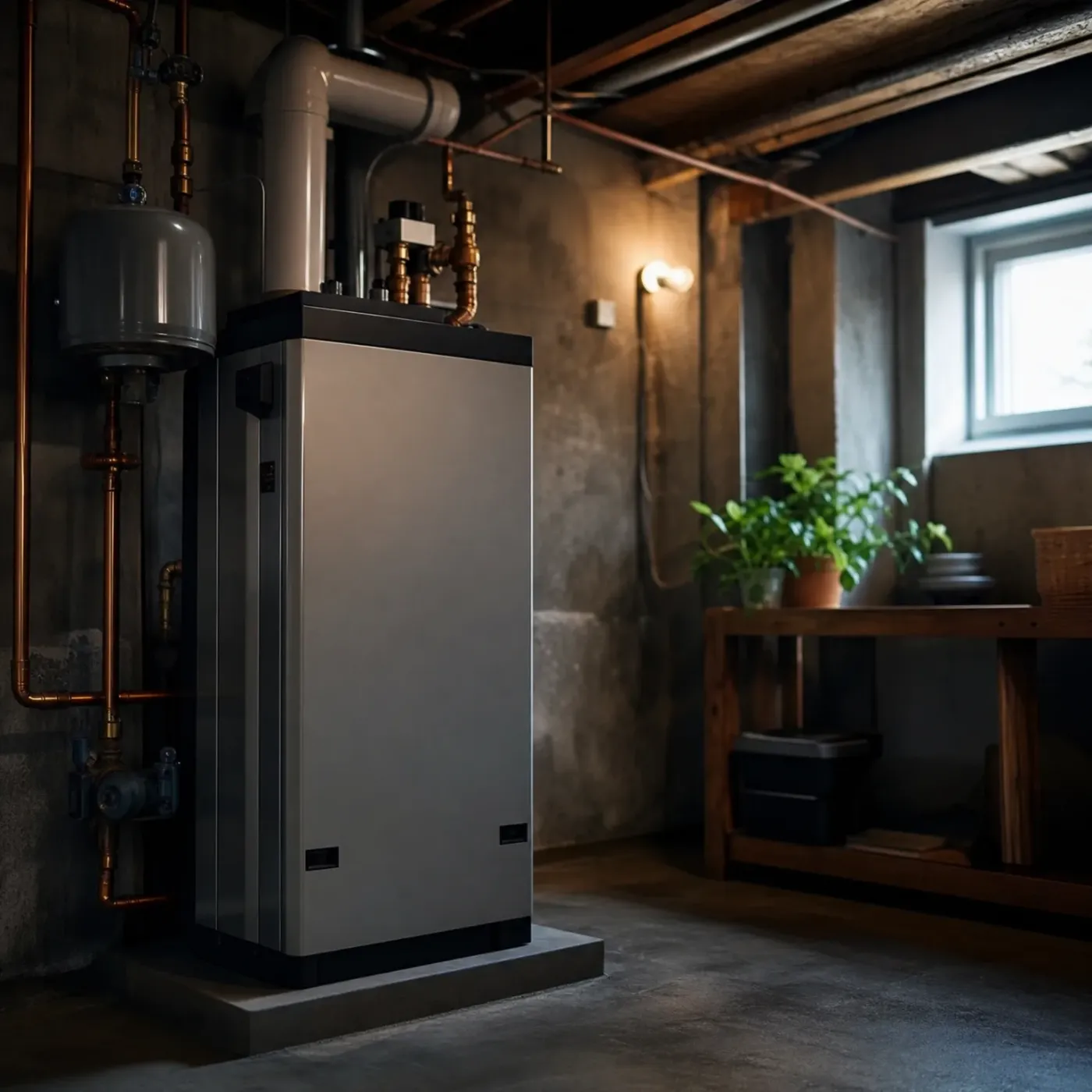




A floor-standing gray boiler unit on a concrete plinth in a basement, with copper pipes, an expansion tank, and a flue pipe above, a wall light, a small potted plant on a wooden shelf, and a window in the background.

Get your boiler to the right pro

What size boiler a Utah home needs

Boiler size comes down to your home's heat loss, not its square footage alone. A unit that's too big cycles on and off and wears out early. Too small, and it won't keep up on a cold January night. This page walks through how a sizing calculation actually works and what changes the number for a Utah house. Skip the research and get matched with a contractor who can size your install correctly.

Get matched

There's no single boiler size for a Utah home. The right size comes from a heat loss calculation, which weighs your square footage against your insulation, window count, ceiling height, and how cold it gets on the worst night of the year. Two houses the same size can need different boilers if one has more glass or a draftier attic. In Utah, that cold-night number matters because winter lows are the whole reason the calculation exists. A boiler sized off square footage alone, or copied from a neighbor's house, tends to run too big or too small. Too big, and it short-cycles, turning on and off instead of running steady, which wears out its parts early. Too small, and it can't keep the house warm when temperatures drop hard. A contractor doing a proper sizing calculation accounts for your specific home, not a rule of thumb.

A smiling woman with dark shoulder-length hair in a cream V-neck sweater sits at a marble counter with a glass of red wine, with a kitchen and softly lit living room behind her.
A woman in a dark green sweater laughs while seated at a marble kitchen island with a glass of red wine, with open shelving, cabinets and a living room visible behind her.
A woman with long dark hair in a cream knit sweater laughs while looking off to the side, seated at a counter with a glass of red wine, in a dimly lit living room with a sofa, lamp, framed pictures and houseplant behind her.
A smiling woman with long dark hair in a beige sweater sits at a marble kitchen counter with a glass of red wine, with a dimly lit living room behind her.

Why bigger isn't safer

An oversized boiler heats the house faster, then shuts off, then fires again a short while later. That cycling is hard on the heat exchanger and the igniter, and it burns more gas than a boiler that runs longer at a steady rate. Short cycling also leaves rooms farther from the boiler feeling uneven, since the system never runs long enough to push heat all the way through the loop. A contractor sizing your boiler is weighing that against the cold nights Utah gets, not just picking the bigger unit to be safe.


What a cold snap tests

Utah winters bring nights well below freezing, and that's the condition a heat loss calculation is built around, not an average day. A boiler sized to your square footage alone might keep up most of the season and then fall behind exactly when you need it most. The calculation accounts for how much heat your home loses through its walls, windows, and ceilings at that worst-case temperature, then matches the boiler's output to replace it. That's a different number than what a tape measure alone would give you.

A smiling bearded man in a navy crewneck sweater sits at a dinner table with a glass of red wine, plates and glasses in the foreground, in a dimly lit room with a lamp and framed picture behind him.
A woman in a dark gray sweater reclines on a light sofa with eyes closed and a slight smile, under a textured gray blanket with an open book resting on her lap, with a lit table lamp and plant in the background.

Guessing by square footage

A contractor who quotes a size over the phone, or by a rule of thumb, is guessing. Your home's windows, ceiling height, and insulation all change the number as much as its square footage does.

Start one form

A Manual J heat loss calculation

A contractor measures your home room by room and factors in Utah's coldest nights. The result is a BTU number sized to your house, not a guess carried over from the last job.

Start one form

Undersized vs. Oversized Boiler

Undersized boiler

  • On the coldest night of the year, it runs flat out and still can't bring the house up to temperature.
  • The rooms farthest from the boiler loop stay noticeably cooler than the rest of the house.
  • Running at full output for long stretches puts steady wear on the heat exchanger instead of the short, even cycles it was built for.
  • A system sized too small has no reserve for a January cold snap or a string of overcast days.
  • Homeowners often notice it first as a thermostat that never quite reaches its setting.

Oversized boiler

  • It satisfies the thermostat fast, then shuts off, then fires again a short while later, all evening long.
  • That start-stop pattern burns more gas over a season than a boiler sized to run longer at a steady rate.
  • Frequent cycling puts more wear on the igniter and the heat exchanger than steady operation does.
  • Utah's gas rates make that extra fuel use a real cost, even with cheap power keeping the electric side down.
  • A bigger unit also costs more to install than the size your home actually needs.
  1. A contractor measures every room's windows, walls, and ceiling height.

  2. Those measurements feed a Manual J heat loss calculation.

  3. The calculation factors in Utah's coldest expected night.

  4. It outputs the BTU output your boiler actually needs.

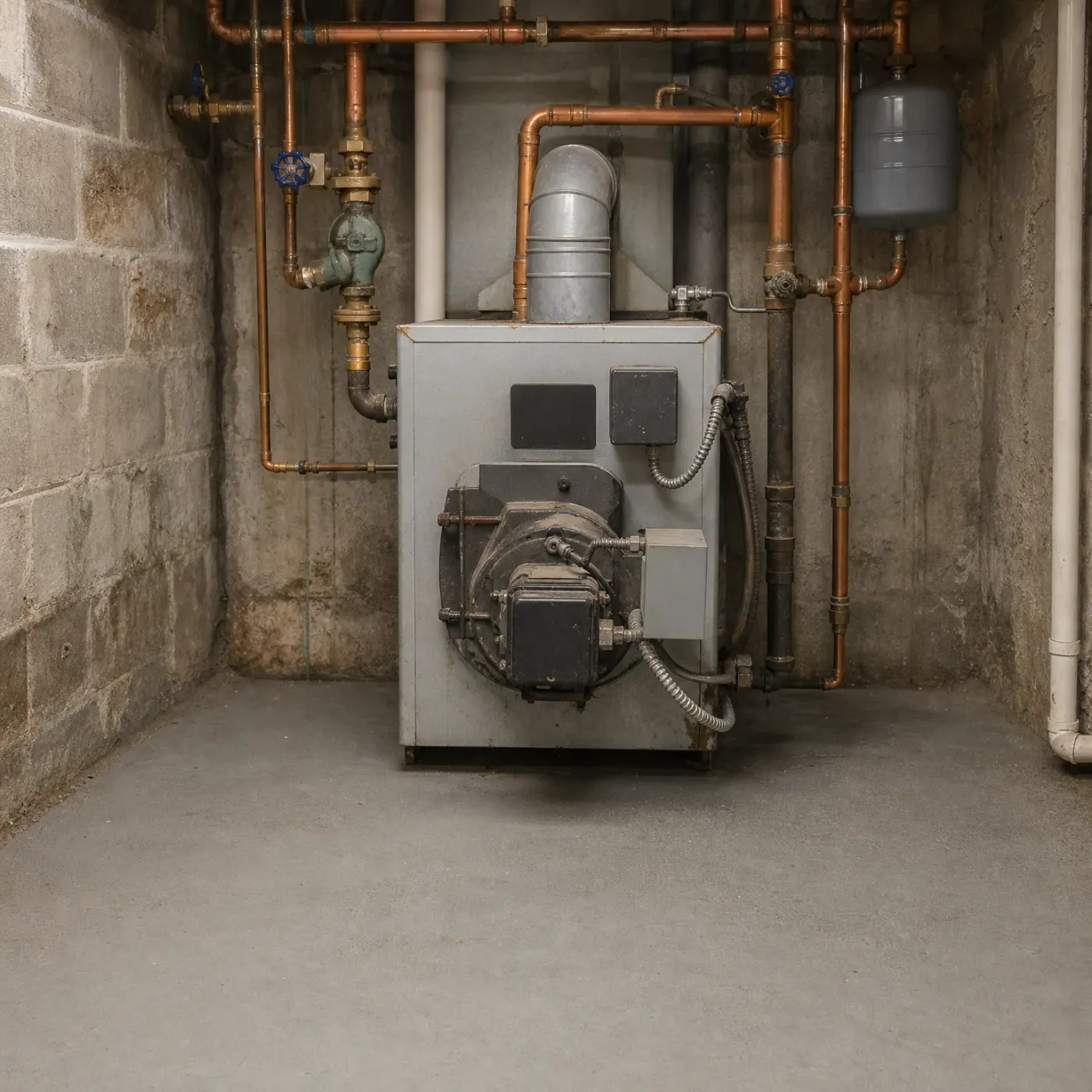
A gray boiler with a flue pipe and burner unit stands against a concrete block basement wall, surrounded by copper and steel piping, valves, and a gray expansion tank, on a bare concrete floor.
Before you get your boiler installation
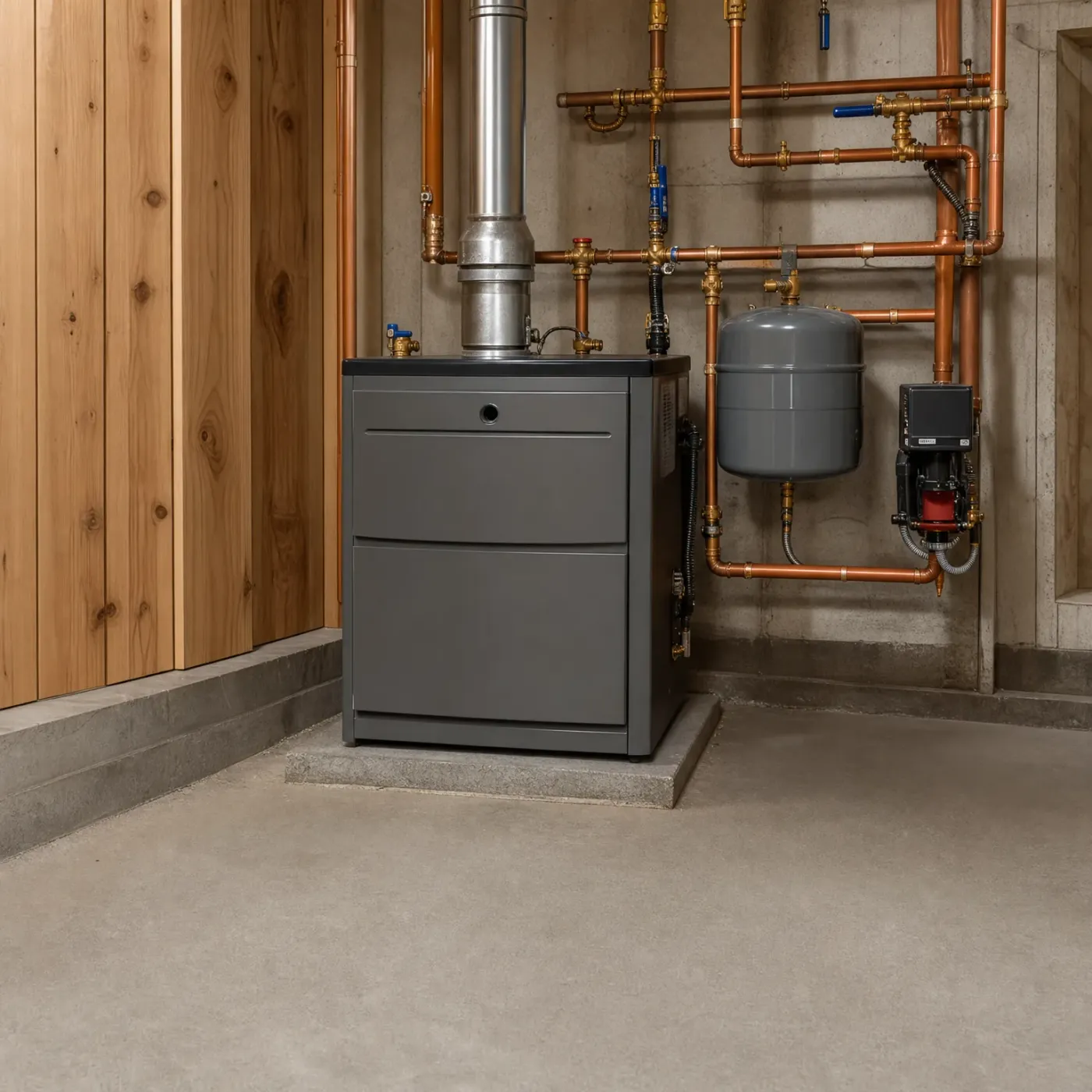
A gray boiler on a concrete pad in a basement, with a metal flue pipe and copper piping, brass valves, a gray expansion tank and a circulator pump mounted on the concrete wall beside wood paneling.
After you get your boiler installation

Matched to your boiler job

A Manual J calculation takes an hour or two of a contractor's time, measuring rooms, counting windows, checking ceiling height. Getting that done right usually means calling two or three contractors, explaining your house to each one, waiting for them to work up a number, then comparing BTU figures that may not even agree. Some will skip the calculation and quote you a size off your square footage, which is the guess this page has already walked through. Matching you with one contractor who takes on the sizing work means you explain your home once, to someone who will actually measure it rather than estimate from a form. Your Utah winter doesn't give a boiler much room for error either way, so the number has to come from your house, not from a guess made over the phone. Getting that number right starts with a contractor who does the calculation instead of skipping it.

A boiler sized wrong doesn't announce itself right away. It shows up as a cold back bedroom all winter, a gas bill that climbs faster than it should, or a system that cycles on and off every few minutes instead of running a long, steady stretch.

You can live with that for years without knowing the cause is the size, not the thermostat or the insulation. Getting the right size in the first place is the only way to not find out the hard way, on the coldest night Utah gives you.

Winter nights average 21°F statewide

That 21°F average is what your heat loss number has to cover, not a mild-winter guess. A boiler sized for a 35°F night will fall behind on the nights that actually show up here, leaving the far rooms cold while it runs flat out.

NOAA nClimDiv 1991-2020 county normals weighted by homes

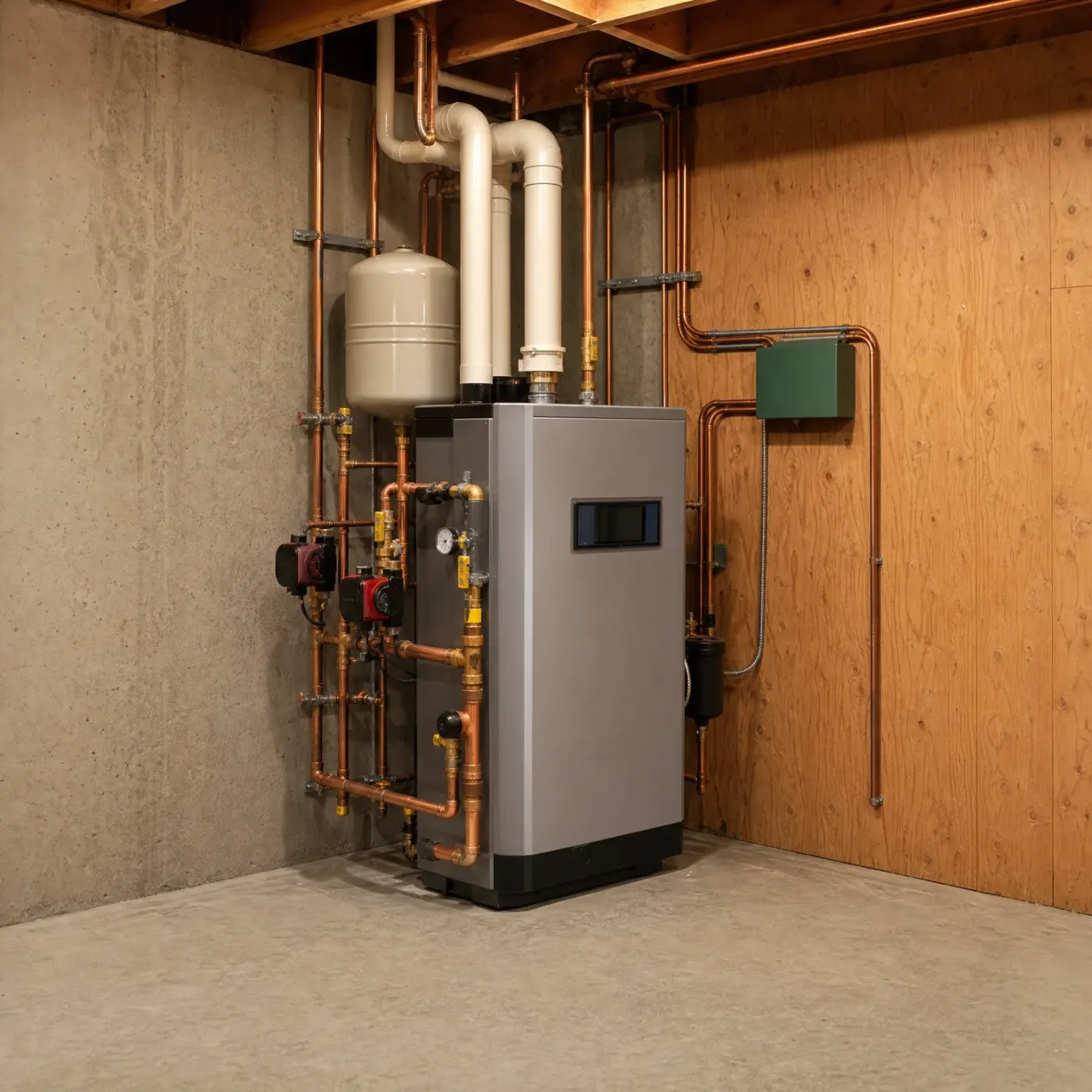
A gray floor-standing boiler in a basement corner with copper piping, two red circulator pumps, a beige expansion tank, white PVC vent pipes, concrete and plywood walls.

Properly sized and running

This is what a correctly sized boiler looks like doing its job. The pressure gauge sits steady, the circulator pumps move water at a normal pace, and the expansion tank is doing its work quietly in the background. Nothing here is straining to keep up.

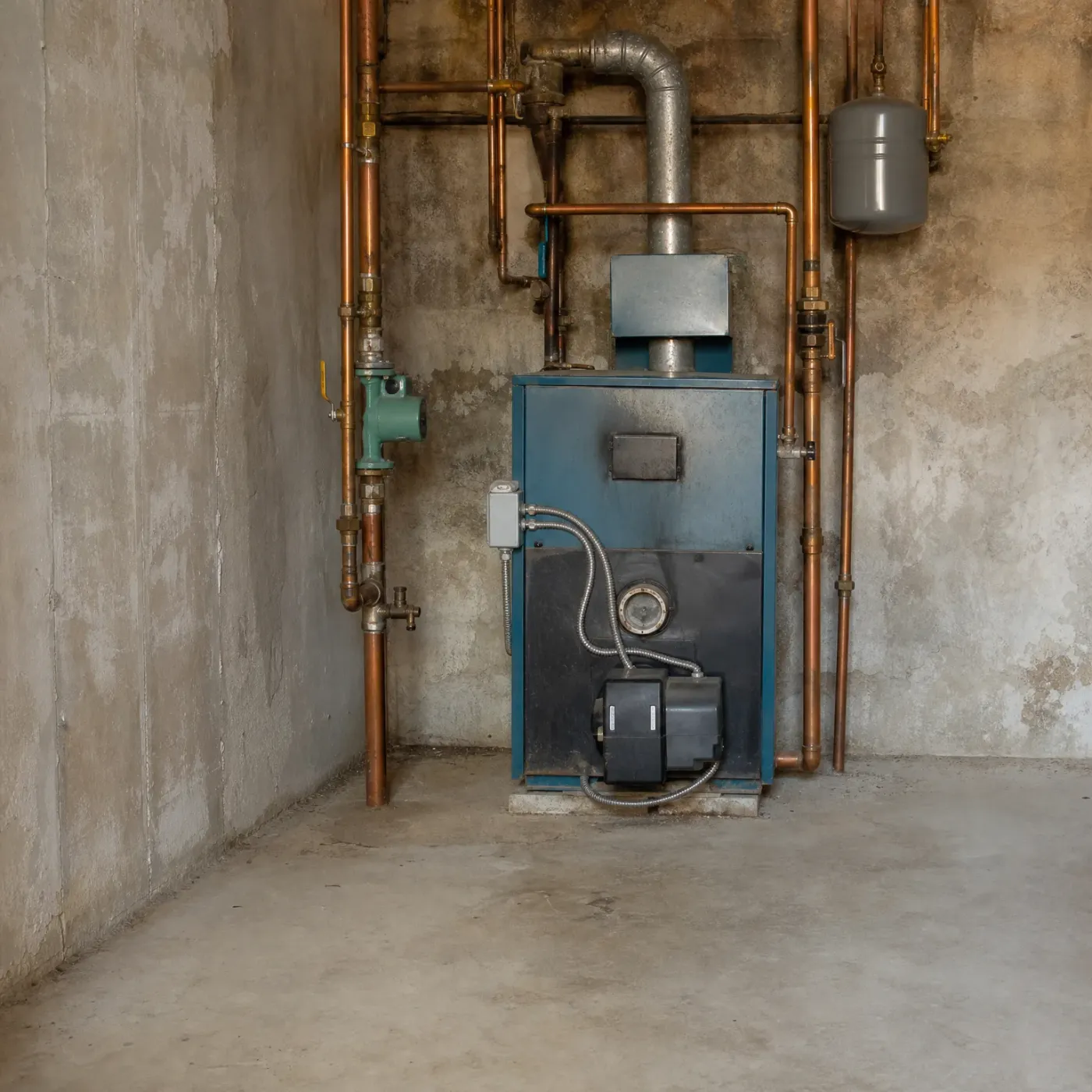
A blue residential boiler with a metal flue, pressure gauge and burner unit stands against a stained concrete basement wall, surrounded by copper pipes, a green circulator pump and a gray expansion tank.

Undersized and overworked

A boiler too small for the house it's heating looks fine sitting against the wall, but the burner assembly is firing longer and more often than it should. The fuel lines and pump are carrying the load a bigger unit would handle with room to spare.

A woman in a cream sweater and jeans stands in the open doorway of a white stucco house, holding the dark door, while a man in a dark quilted jacket seen from behind walks toward the entry past potted plants.

The right size comes from your house, not a guess

Your boiler's size should come from a heat loss calculation that accounts for your home's windows, insulation, ceiling height, and the cold Utah nights it has to cover. That number is specific to your house. A neighbor's boiler, even in a similar house, may not be the right size for yours.

Getting that calculation done, and getting the right boiler installed from it, usually means calling around to find a contractor who'll do a Manual J instead of a guess, then explaining your house over again to each one. When you go through this page instead, that part is handled. You're matched with a contractor suited to your home, and they'll reach out to you directly to go over what your house actually needs.

Interior corner with a beige sofa holding a dark green and a light cushion and a textured throw, a potted small-leaved tree beside a white-framed window, and a dark shallow bowl on a wooden coffee table in the foreground.
At dusk, a dark board-and-batten house with a standing-seam metal roof and lit entry walkway of stone pavers, with two large outdoor heat pump units on a stone-walled pad at right and trees and hills in the background.

Boiler Installation

A boiler pro near you

Step 1 of 3: Equipment
  • A dimly lit living room corner with a beige upholstered sofa holding a dark green cushion and a chunky knit throw, beside a wooden sideboard with a lit ceramic table lamp, a small potted plant, and a wooden bowl, with a framed artwork on the wall and a mug on a book in the foreground.
    • Describe your boiler job, and a local pro who handles it gets in touch.
    • Say what's going on with your boiler, and a pro who works on them reaches out.
  • A round wooden coffee table holding a round stone vase of green foliage, a lit candle in a glass container, and a small dark bowl, with a beige sofa, cushions and knit throw behind and a window at left.
    • Send the form and the search for an installer is over.
    • Send the form and stop researching installers for the new boiler.
  • Sunlit living room with a wooden coffee table holding a ceramic vase of leafy branches and a carved wooden tray with two stacked books, in front of a beige sofa with tan and green cushions and a potted plant near a window.
    • Describe your boiler job once, to one pro.
    • Skip collecting and comparing quotes for the new boiler.
  • Interior corner with a lit ceramic table lamp and wooden bowl on a wood sideboard, a framed picture and branch-filled vase behind, a knit throw over an upholstered chair, and a lit candle in a glass holder, stoneware mug and round planter of green foliage on a wooden table in the foreground.
    • Your request stays with one local pro.
    • Your request goes to one pro, not a list of companies.