
Why your boiler is leaking water in Utah
A leaking boiler usually means water escaping from a loose fitting, a worn valve, or the pressure relief valve doing its job because the system is over-pressurized. The pressure relief valve is built to open when pressure gets too high, so a few drips near it is often the system protecting itself, not failing outright. A cracked heat exchanger is more serious and shows up as water pooling near the unit itself rather than at a single valve or joint. Corroded pipe fittings and a worn circulator pump seal are common causes too, and both tend to get worse slowly rather than all at once. Utah's gas-heated homes run boilers hard through the cold months, and a system under that kind of steady use is exactly where a small leak gets caught early or turns into a bigger repair. Where the water is coming from tells you a lot about how serious it is, but pinpointing the source usually means someone looking at the system directly.
Winter nights average 21°F statewide
At 21°F those overnight lows, your boiler is running long stretches to keep up, and more run time means more pressure cycling through that relief valve and every fitting it passes. A small drip now is worth catching before a cold snap turns it into a bigger leak.
NOAA nClimDiv 1991-2020 county normals weighted by homes

Pressure builds in the system as the boiler heats water
The expansion tank absorbs that pressure under normal operation
A waterlogged expansion tank sends excess pressure into the relief valve
The pressure relief valve opens and water escapes through its discharge pipe
What is that puddle near the boiler telling you
Check the floor around the base and you might find a small puddle, a damp patch on the concrete, or a rust-colored stain that keeps coming back no matter how many times you wipe it up. Look at the pipe fittings and the valve on top for a slow drip or a mineral crust built up where water has dried. You might hear a faint hiss when the burner kicks on, or notice the pilot light acting strange if moisture is reaching the burner compartment. Left alone, that water can corrode the burner assembly and the controls underneath it, and corroded controls are what turn a drip into a boiler that won't fire at all.
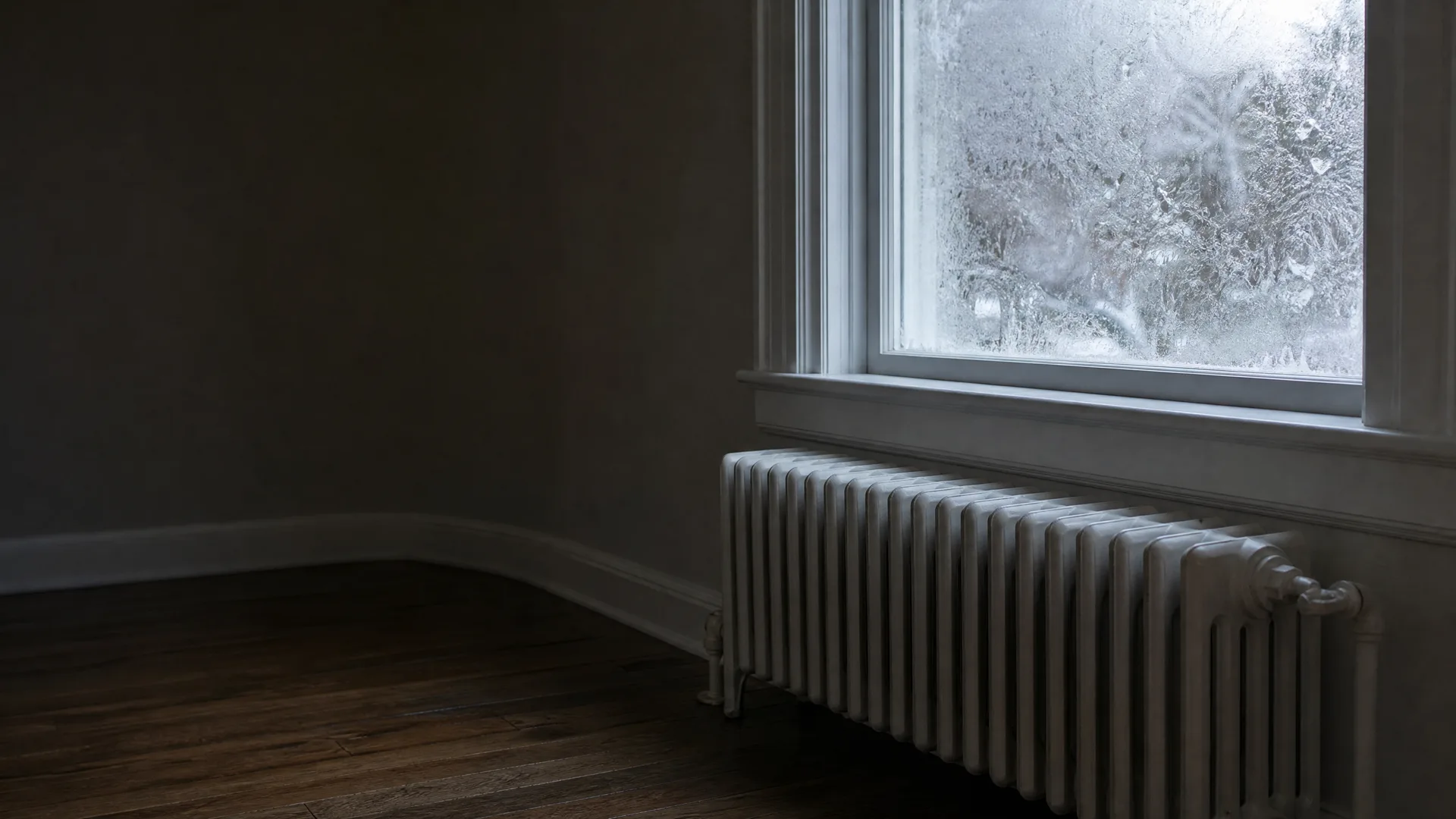
You're up before the sun, same as always in January, and the living room is cold enough that you can see your breath near the window. The cast-iron radiator under it ticks as it heats, and ice has crept up the inside of the glass overnight, thin and feathered at the edges. You crouch down to check the radiator valve out of habit and your sock lands in a cold puddle on the floor. You press a finger to it, then to the fitting above it, and it's wet there too. Outside the window the street is still dark and the frost on the lawn hasn't touched the sun yet. You grab a towel and set it down, and you stand there a minute looking at the fitting before you go find your phone.
A local pro for your boiler repair
A boiler leak doesn't fix itself, and with those cold Utah nights still ahead, waiting means more cycles through a relief valve or fitting that's already struggling. Finding someone to look at it usually means searching local companies, calling a few, describing the same puddle and the same stain three or four times, then waiting on quotes to compare before you even know who's available. That's the part worth skipping. Tell us what's going on with your boiler once, and the request goes to a contractor who takes it from there and reaches out to you directly. No calling around, no repeating yourself to five different voicemails, no guessing which company actually works on boilers in your area. You still have a leak to deal with. This just gets you to someone who can look at it without the runaround.
What the Leak Comes Down To
- A leak near the boiler usually traces back to a loose fitting, a worn valve, or a relief valve responding to too much pressure.
- A waterlogged expansion tank is a common root cause, since it can no longer absorb pressure the way it should.
- Utah's cold winter nights push boilers into longer run times, and that extra cycling puts more strain on fittings and valves.
- Catching a small drip now, before the next cold snap, keeps a minor leak from turning into a bigger repair.
- A rust-colored stain that keeps reappearing after wiping is a sign the source is still active, not resolved.
- Finding a contractor to check it over means skipping the calls, the repeated explanations, and the side-by-side quote comparisons.
A boiler leak almost always comes from one of a handful of places: a fitting that worked itself loose, a valve that's worn past holding a seal, or the pressure relief valve doing exactly what it's supposed to do when pressure climbs too high. Behind a lot of these calls sits the expansion tank. Once it's waterlogged it can't absorb pressure the way it's built to, so that pressure has to go somewhere, and it ends up pushing water out through the relief valve or whatever fitting is weakest. Utah's winter nights make this worse, not better. Longer run times mean more pressure cycling through the system night after night, and a fitting or valve that was barely holding now gets tested more often. A puddle by the base or a stain that keeps coming back after you've wiped it clean means the source is still there, still active, not something that resolved on its own. None of this is complicated once someone's looked at it, but it does need a look. Left alone through a stretch of cold nights, a small drip has more chances to become a bigger one. The part that takes real time, calling around, explaining the same leak to every company, lining up quotes to compare, is the part that goes away once you're matched with a contractor who already knows what questions to ask about a boiler leak in your situation.
Get the right pro for your boiler
Describe your boiler job once, to one pro.
You're not committing to anything by asking.