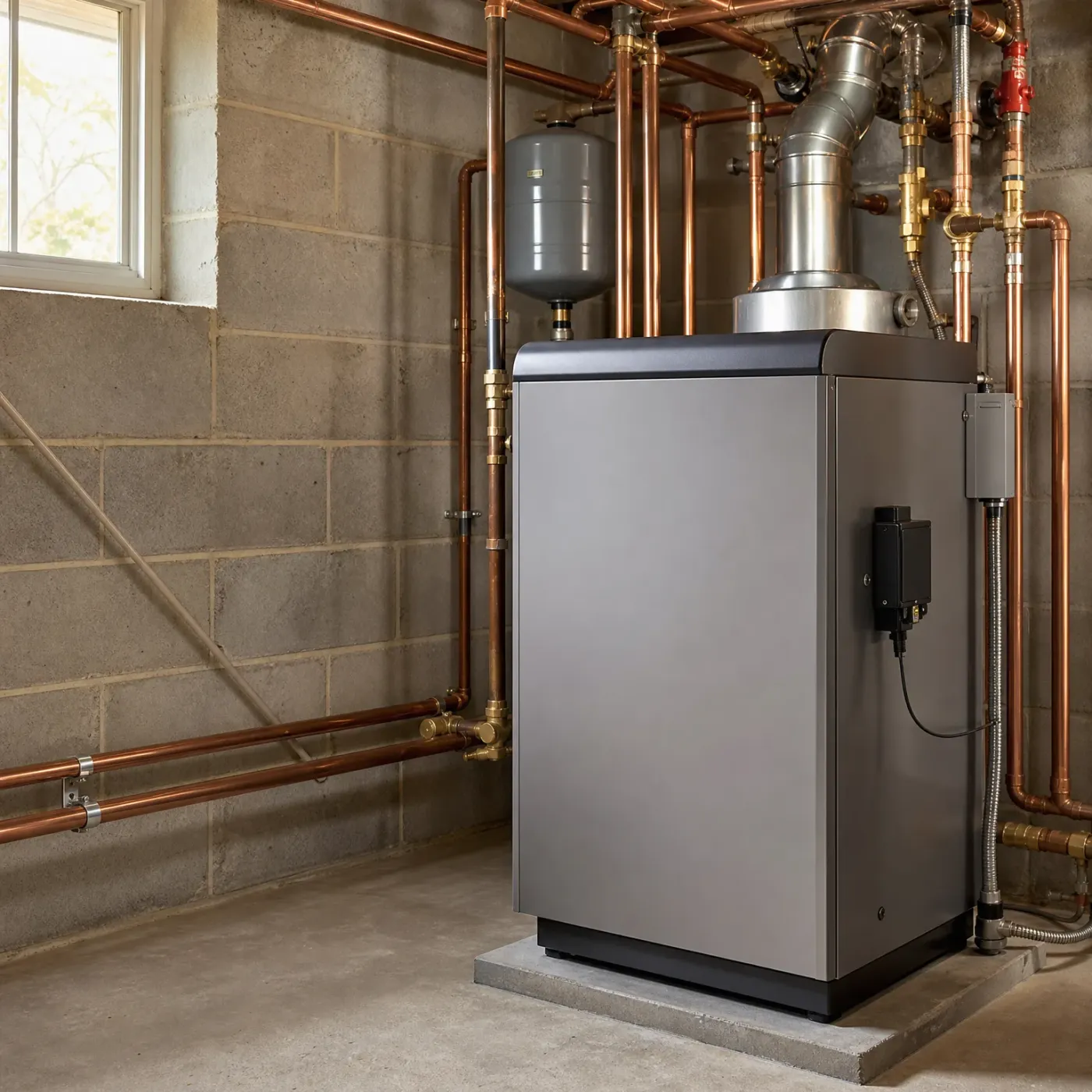
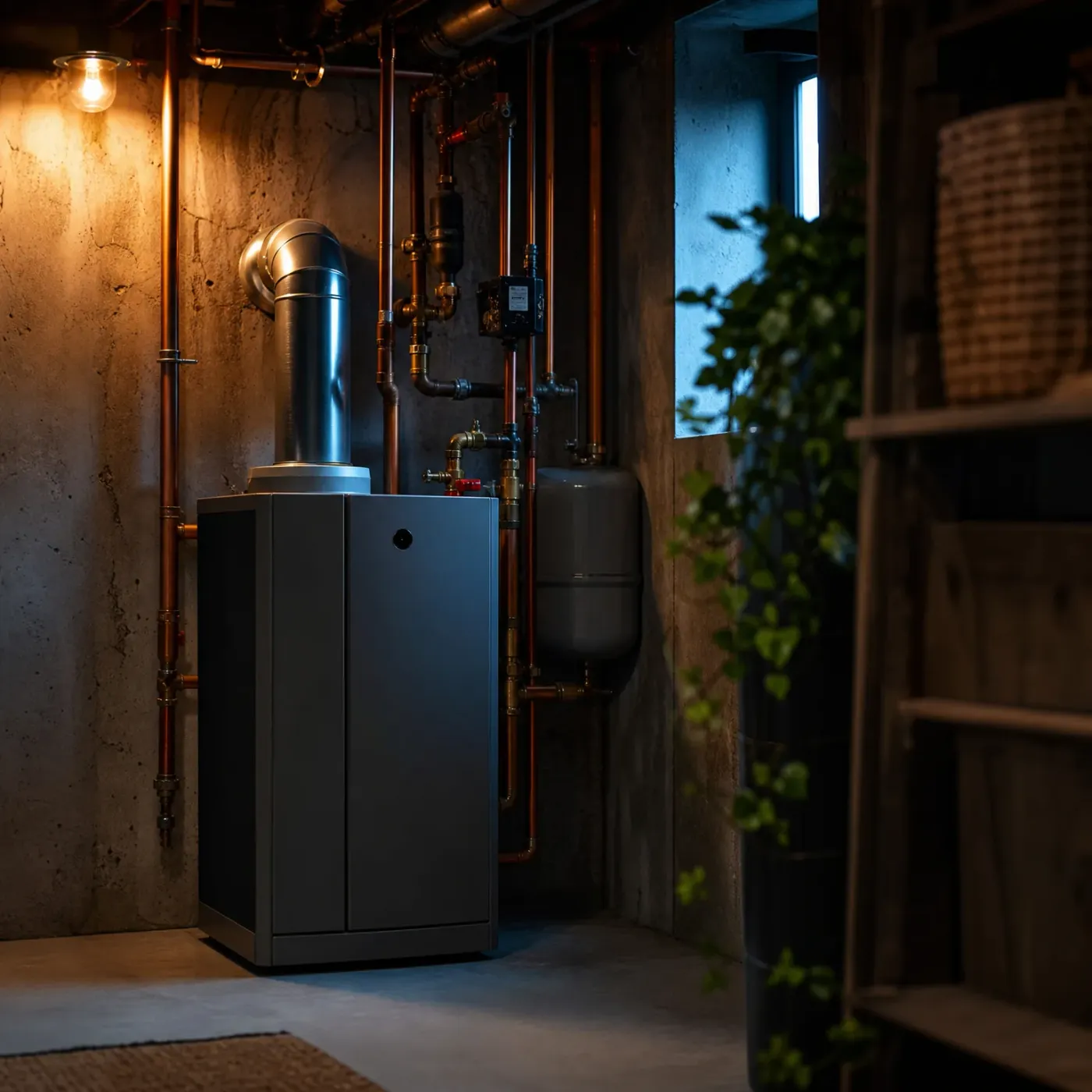
A dark grey floor-standing boiler with a metal flue stands against a concrete basement wall, surrounded by copper pipework, valves and a wall-mounted expansion tank, with ivy and a shelving unit at right.

A pro who works on boilers

Why your boiler makes a banging noise in Utah

That banging is usually water hammer, trapped air, or scale built up on the heat exchanger. None of those go away on their own, and running the boiler through a Utah winter with the noise ignored tends to make the fix bigger later. This page goes through what's likely causing it and gets you to a contractor who can take a look and sort it out.

Match me with a pro

That banging usually means one of three things. Water hammer happens when a pipe fills with water fast and slams against a fitting, often right when the boiler fires. Trapped air does something similar, moving through the pipes and knocking against valves as it tries to escape. Scale is different. It builds up on the heat exchanger over time, and when the burner heats the water underneath that hard layer, the water pops and bangs trying to get through it. Utah's water runs hard in a lot of places, which feeds that third cause more than people expect. None of these fix themselves. A boiler that bangs this winter will likely bang louder next winter, and scale in particular tends to stress the heat exchanger the longer it sits.

A smiling man in a dark navy sweater sits on a light sofa in a living room, with a glass bowl of popcorn on a wooden coffee table and bookshelves behind him.
A smiling man in a dark green sweater sits on a tan leather sofa in a dimly lit living room, with a bowl of popcorn in the foreground and a kitchen area blurred behind him.
A smiling middle-aged man in a dark shirt sits on a gray sofa in a living room, with a bowl of popcorn on a side table and shelves, a window and kitchen area behind him.
A smiling bearded man in a dark gray t-shirt sits on a gray couch in a living room, with a large glass bowl of popcorn on a wooden table in the foreground.

Fix the Noise, or Replace the Boiler

Noise fixed, boiler stays

  • A contractor can bleed trapped air from the system and refill it, which quiets the knocking within one heating cycle most of the time.
  • Scale on the heat exchanger gets flushed out, and the kettling sound that comes with it goes away without touching the rest of the boiler.
  • Water hammer gets addressed at the fitting or valve causing it, not by replacing anything upstream of that point.
  • Utah's hard water contributes to scale buildup, so a flush now still leaves the same water behind to build scale again over time.
  • Cost stays tied to the specific fix, whether that's a bleed valve, a water feeder adjustment, or a descaling job.
  • If the banging is new and the boiler is otherwise running fine, this is usually where a contractor starts.

Noise points to bigger wear

  • If scale has built up enough to crack or warp the heat exchanger, the noise was a symptom of damage that a flush can no longer undo.
  • A boiler that's banged for more than one winter may have had scale baking onto the exchanger the whole time, not just recently.
  • Repeated water hammer stresses the same joints and valves each time it happens, and that wear doesn't reverse once the noise stops.
  • Replacing the unit resets the clock on scale buildup, since a new heat exchanger starts clean.
  • This is the harder case to call without someone looking at the exchanger directly, since banging alone doesn't say how far the damage has gone.
  • A contractor can tell you after inspection whether the exchanger is still sound or whether repair just buys another season before the same noise comes back.
A dark gray floor-standing boiler on a concrete pad in a basement, surrounded by copper piping, brass valves, a gray expansion tank, a circulator pump, and a metal flue pipe against concrete block walls.

Quiet and running clean

A boiler like this fires without a sound beyond a soft whoosh of gas and the hum of the circulator pump. Pressure holds steady on the gauge, water moves through the copper lines without catching air, and the heat exchanger inside stays clear enough that nothing rattles when the burner kicks on.

A blue boiler on a raised concrete pad in a basement corner, with copper and steel pipes, a gauge cluster, an expansion tank, and a metal flue running up the bare concrete walls.

Banging and left alone

An older boiler that bangs is usually telling you something specific through those pipes. Left through a winter, water hammer can work a joint loose, trapped air can starve a loop of heat, and scale on the exchanger can crack it from the strain of overheating around the buildup.

A man seen from behind raises his hand to wave at a woman standing in the open front doorway of a single-story house with gray shingle siding, white columns and a gabled porch entry.

That banging gets worse on the coldest nights, not better

You'll notice it most when the boiler is working hardest, usually after dark when you've got the thermostat up and the house is finally quiet enough to hear it. A few knocks when the system fires is one thing. Banging that carries through the walls into the bedroom is scale or trapped air doing real work against metal that isn't built to take it. Left alone through a Utah winter, that's a heat exchanger under more strain every time it fires, and a pressure relief valve or circulator pump picking up the slack.

You don't have to figure out which one it is before you do anything about it. Send in what you're seeing and hearing, and a contractor who works on boilers in your area will get in touch to look at your system directly. That's one less thing to sort out yourself on a night when you'd rather just get the house warm and move on to something else.

A living room corner with a beige upholstered armchair holding navy and striped cushions, a small round wooden side table with a carved bowl and a potted green plant, a framed landscape picture on a pale wall, built-in shelving, and a curtained window.
A woman with dark hair in a bun reclines on a sofa with her eyes closed, wrapped in a cream fleece blanket, a closed blue hardcover book resting in front of her, with a lit lamp and a vase of dried flowers in the background.
A smiling bearded man in a navy sweater sits at a candlelit dinner table with a glass of red wine, a bowl of salad, and plates of food in the foreground.
A gray floor-standing boiler on a concrete pad in a basement with concrete block walls, connected to copper piping, a flue vent, and an expansion tank.

Get your boiler to the right pro

Once you send the form, finding a pro is off your list.

Tell a local repair pro what your boiler is doing.

Hand it off

There's no charge for the request.

What is that banging actually doing to your boiler

You hear it in the pipes near the boiler, maybe in the walls upstairs too, a knock or a series of them right as the burner kicks on. Sometimes it sounds more like a kettle starting to whistle, a low rumble building before the heat even reaches the radiators. The noise itself isn't dangerous tonight. But scale sitting on the heat exchanger makes the boiler work harder to move heat into the water, and a heat exchanger that overheats in spots can crack over time. Trapped air and water hammer put repeated stress on joints and valves that weren't built to take it. None of that shows up on your gas bill right away. It shows up later, as a bigger repair.

  1. Cold water fills the boiler and the pipes are still full of air.

  2. The burner fires and heats water fast near the heat exchanger.

  3. Trapped air gets pushed through the pipes toward the radiators.

  4. Air pockets slam against valves and fittings as water chases them.

A gray boiler unit on a concrete pad in a basement corner, connected to copper piping, circulator pumps, and a ceiling-mounted expansion tank against bare concrete walls.
A boiler running right holds steady pressure on the gauge, with water moving through the copper lines quietly.
A blue oil-fired boiler with a pressure gauge, burner unit and metal flue sits on a concrete pad in a basement corner, surrounded by copper and black pipes against bare concrete walls.
A boiler like this, with a gauge needle that won't sit still, is usually the one making the noise you called about.
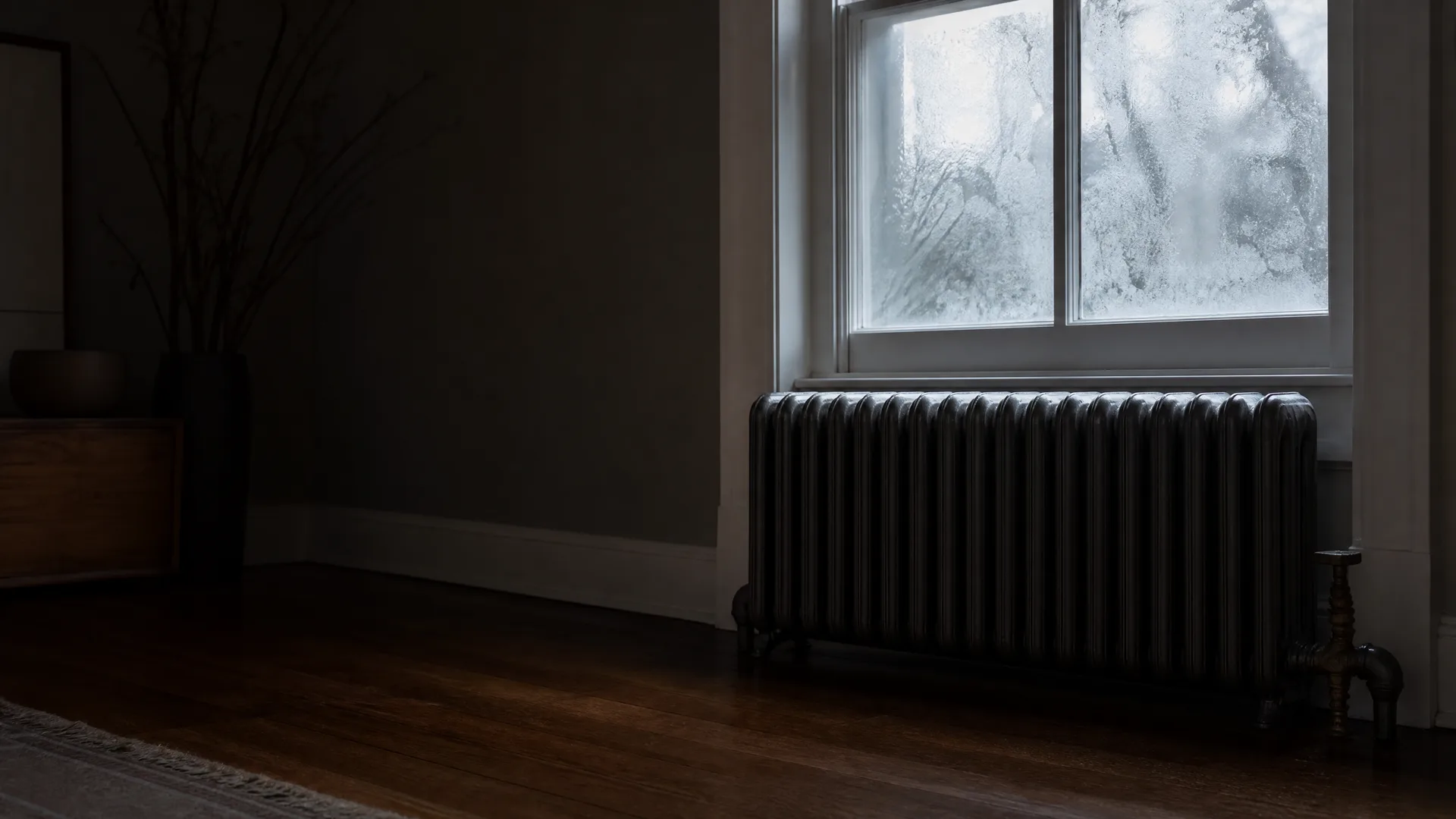
A cast-iron column radiator stands beneath a frosted window in a dim room with dark walls, a wood floor, and a vase of bare branches on a low cabinet at left.

The sun isn't up yet. You're in the living room in socks, waiting by the radiator under the window because it's the only warm spot in the house. Ice has crept across the inside of the glass overnight, feathered at the edges. The boiler kicks on somewhere below you and a second later the pipe behind the radiator gives a hard knock, then another, like someone rapping a wrench against the copper. The radiator ticks as it heats. Outside it's still dark, maybe single digits. You pull your sleeve over your hand and wipe a clear patch in the ice so you can see the driveway, and wait for the banging to settle into just the regular hiss of heat coming up.

Winter nights average 21°F statewide

With overnight lows averaging 21°F here in winter, your boiler is firing hard and often through the night, and that's exactly when trapped air or water hammer tends to knock loudest.

NOAA nClimDiv 1991-2020 county normals weighted by homes

What the Noise Comes Down To

  • Banging from a boiler traces back to trapped air, water hammer, or scale on the heat exchanger, and a contractor can tell which from how it sounds.
  • None of those three fix themselves, and a Utah winter spent ignoring the noise usually ends with a bigger repair bill than the one you'd have paid in November.
  • Bleeding the air out, correcting the water hammer, or flushing the scale off the heat exchanger brings a boiler back to running quiet within a cycle or two.
  • Once you send the form, you're done looking for someone, and a contractor who handles this noise reaches out to you directly.
  • The boiler keeps heating the house while that happens, so there's no cold stretch to get through before the noise gets addressed.
  • Pressure that holds steady and a burner that fires without a sound beyond a soft whoosh are what a boiler running right actually sounds like.

The banging is trapped air, water hammer, or scale on the heat exchanger. A contractor who hears it, or hears you describe it, can usually tell which one it is before any panel comes off. None of the three gets better with time. Air pockets don't work themselves out of copper lines on their own, a pipe that's slamming against a fitting will keep slamming, and scale builds on a heat exchanger instead of wearing away. Left through a Utah winter, any of them tends to turn into a bigger repair than the one you'd have paid for in November, when the boiler was still just noisy instead of struggling.

The fix itself doesn't take long once someone's working on it. Bleeding air from the system, correcting whatever's causing the water hammer, or flushing scale off the heat exchanger usually quiets a boiler down within a cycle or two of running. You're not looking at a stretch of cold mornings waiting for parts or waiting for the right weather. The boiler keeps firing and the house stays heated through the whole process.

What you're waiting on now isn't the noise, it's finding someone to deal with it. Once you send the form, that part is off your plate. A contractor who works on this gets in touch with you directly, and from there it's their job to figure out which of the three it is and get your boiler back to the quiet it's supposed to run in, pressure steady, burner firing clean, nothing knocking in the walls.

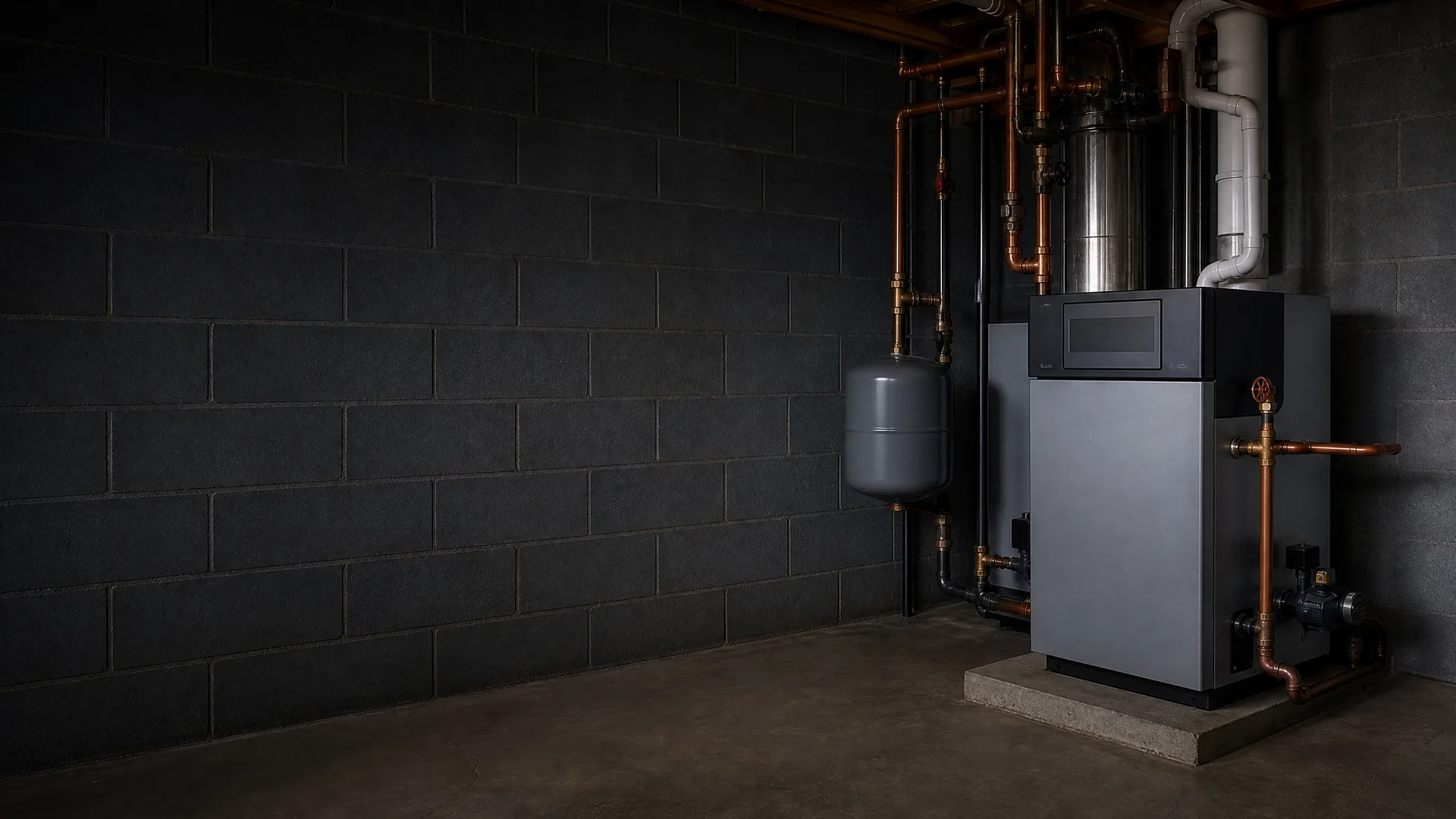
A gray boiler unit with a control panel sits on a concrete pad in a basement room with dark concrete block walls, connected to copper and metal piping, a gray expansion tank, and an insulated flue.

The right pro for this job

After you send the request, you're done searching.

Step 1 of 3: Equipment